


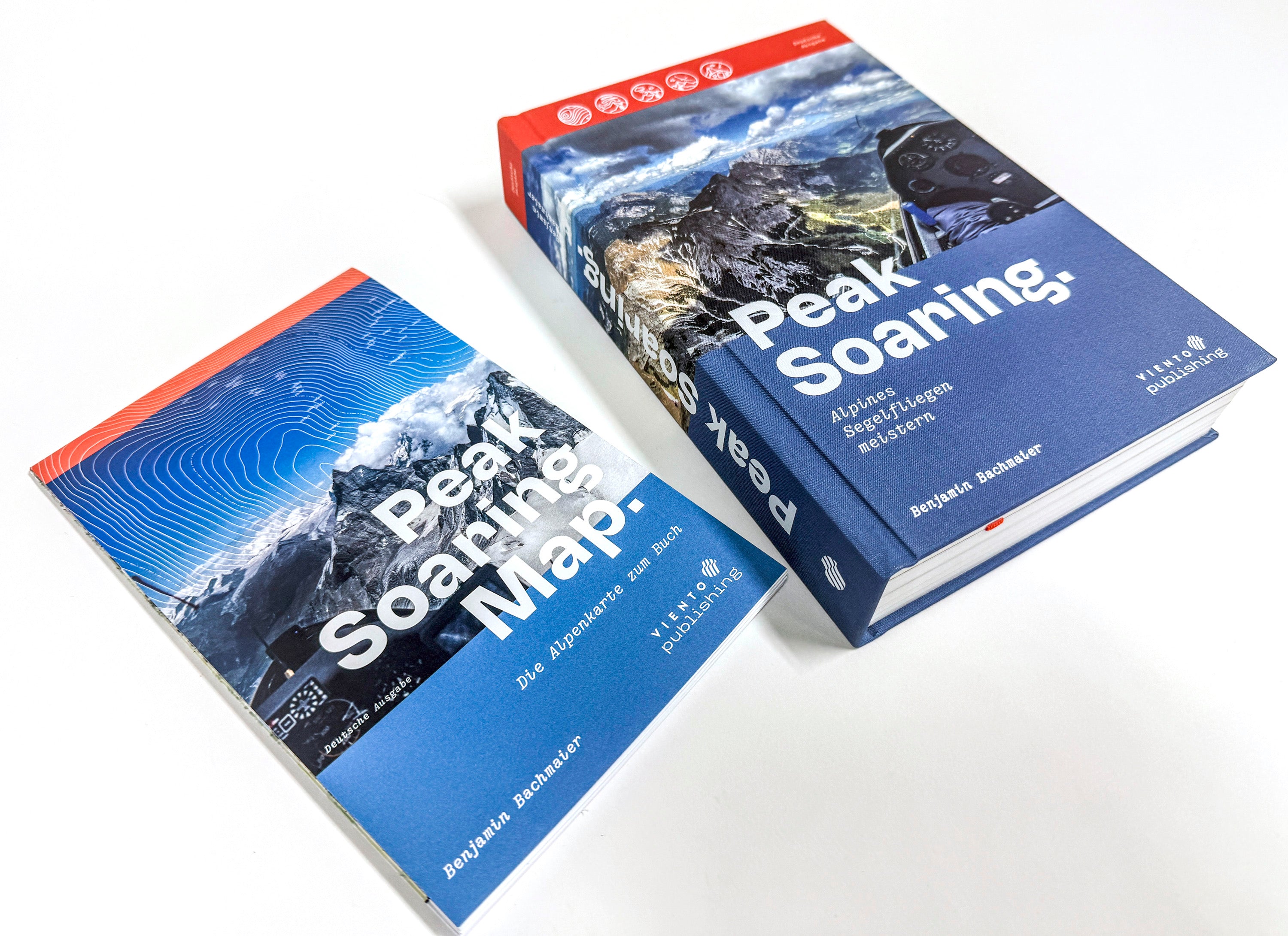
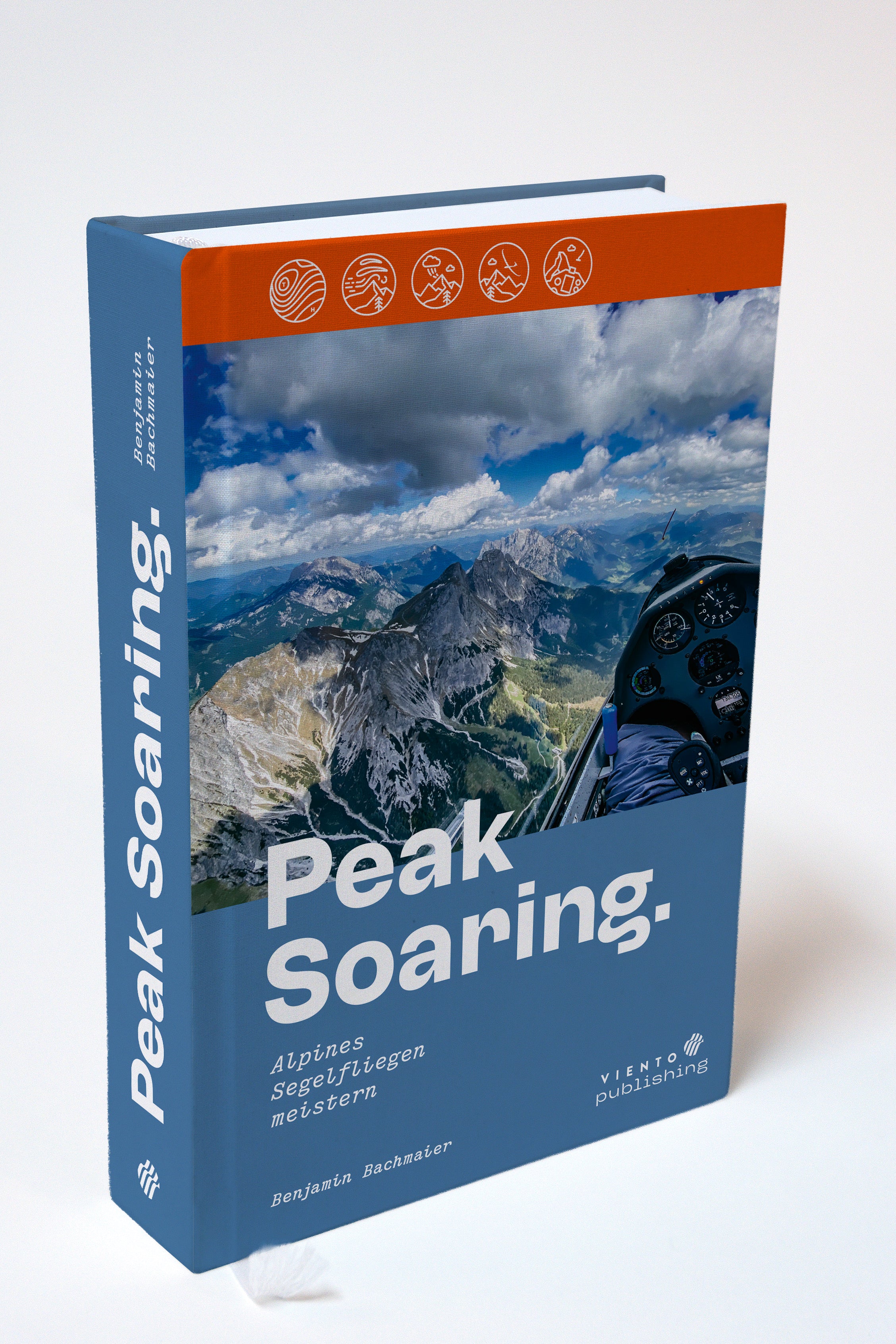
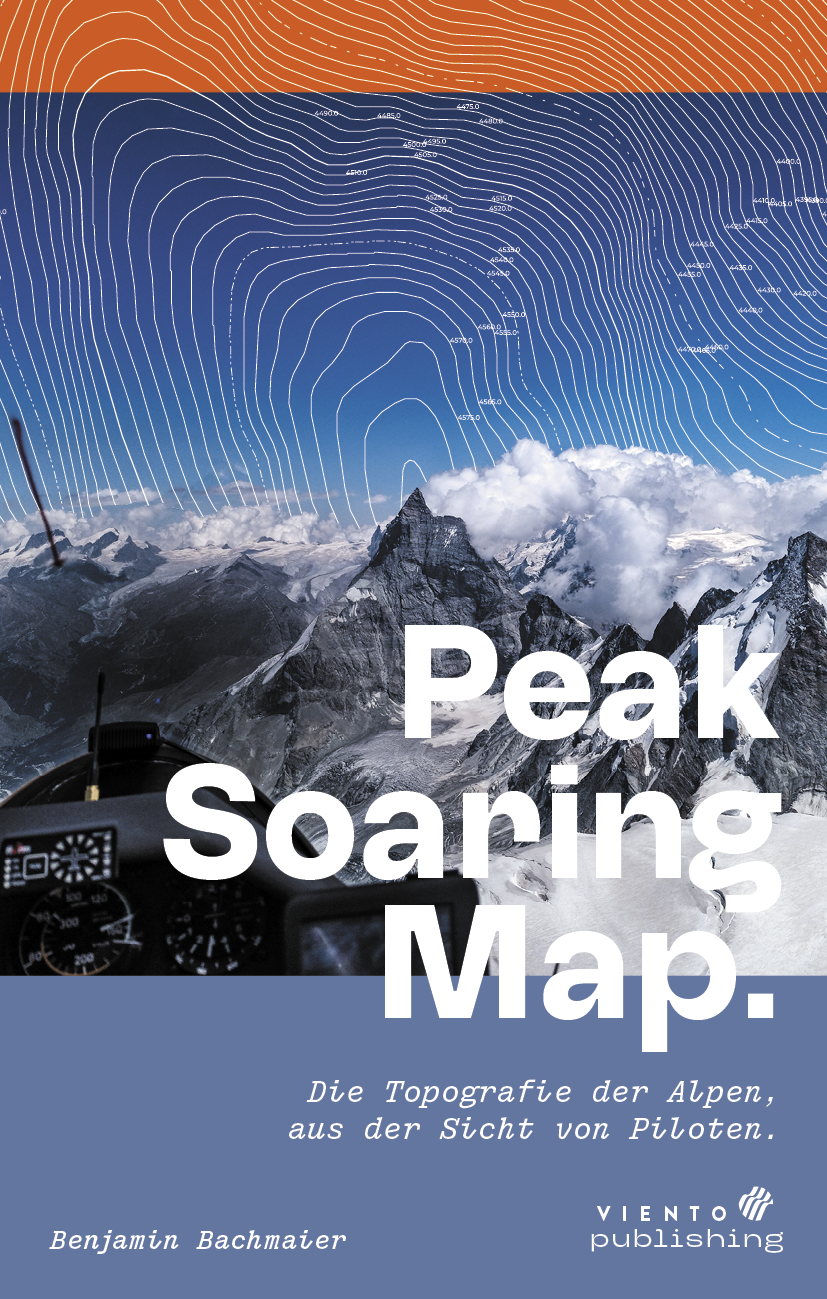
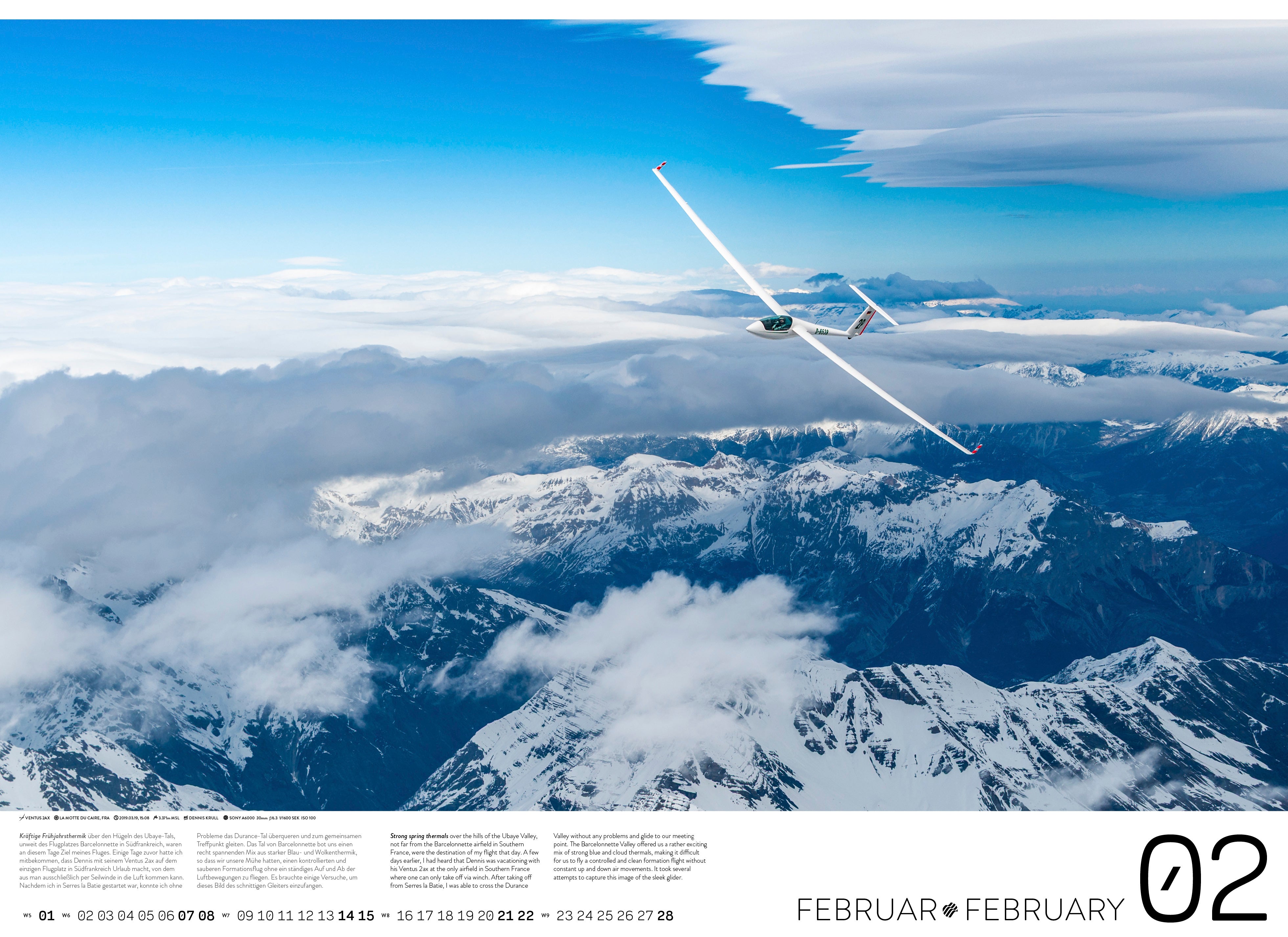
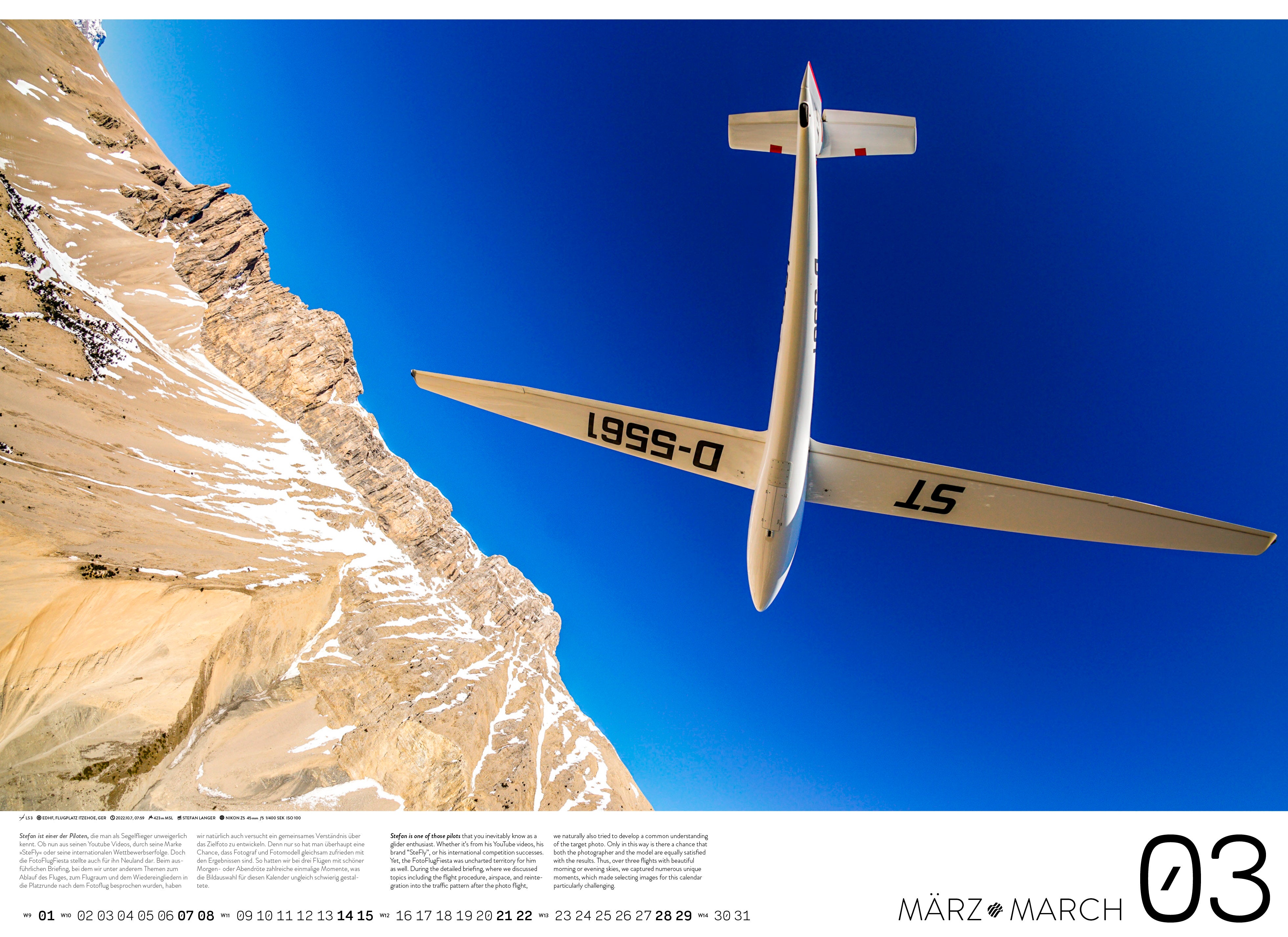
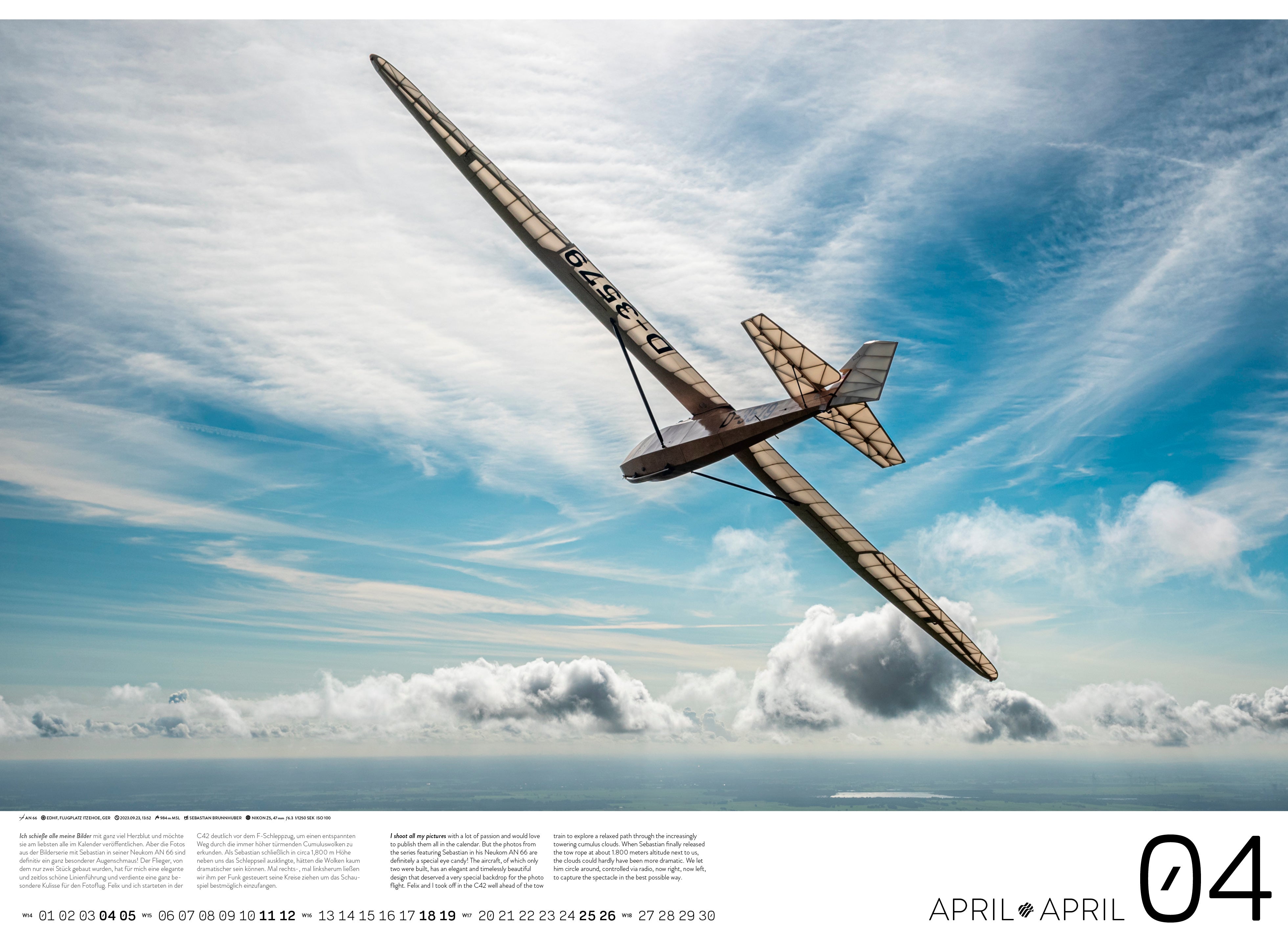
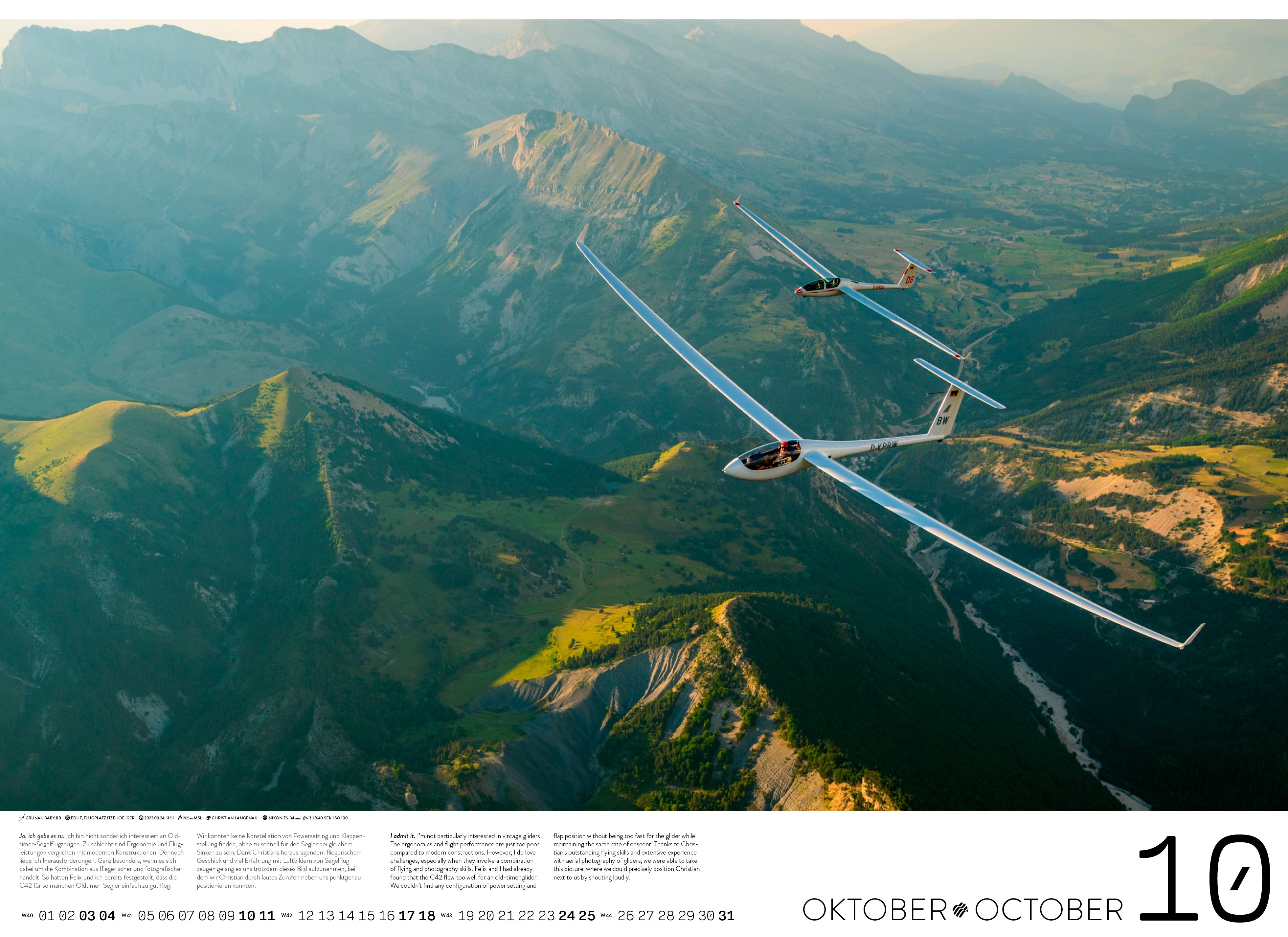
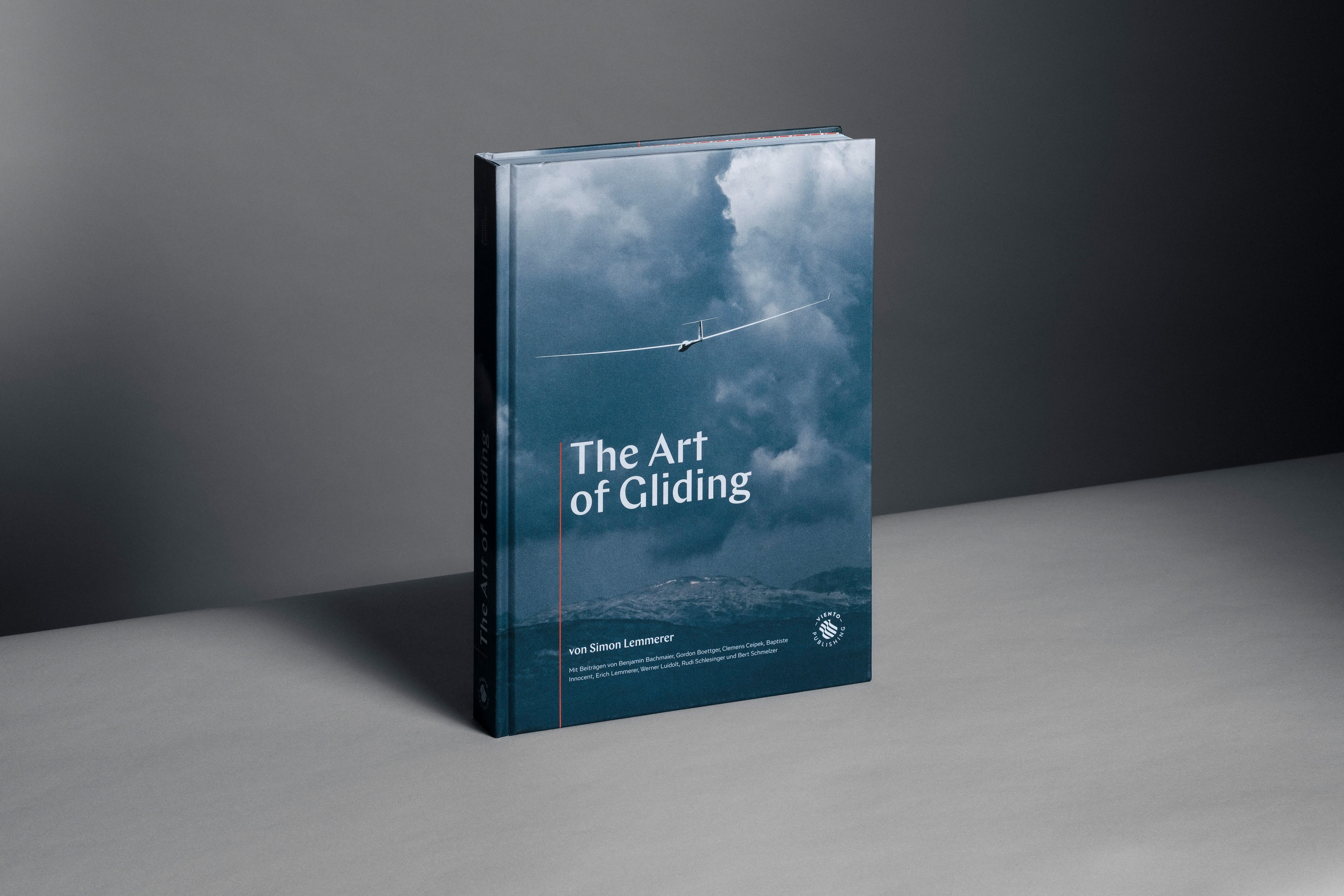
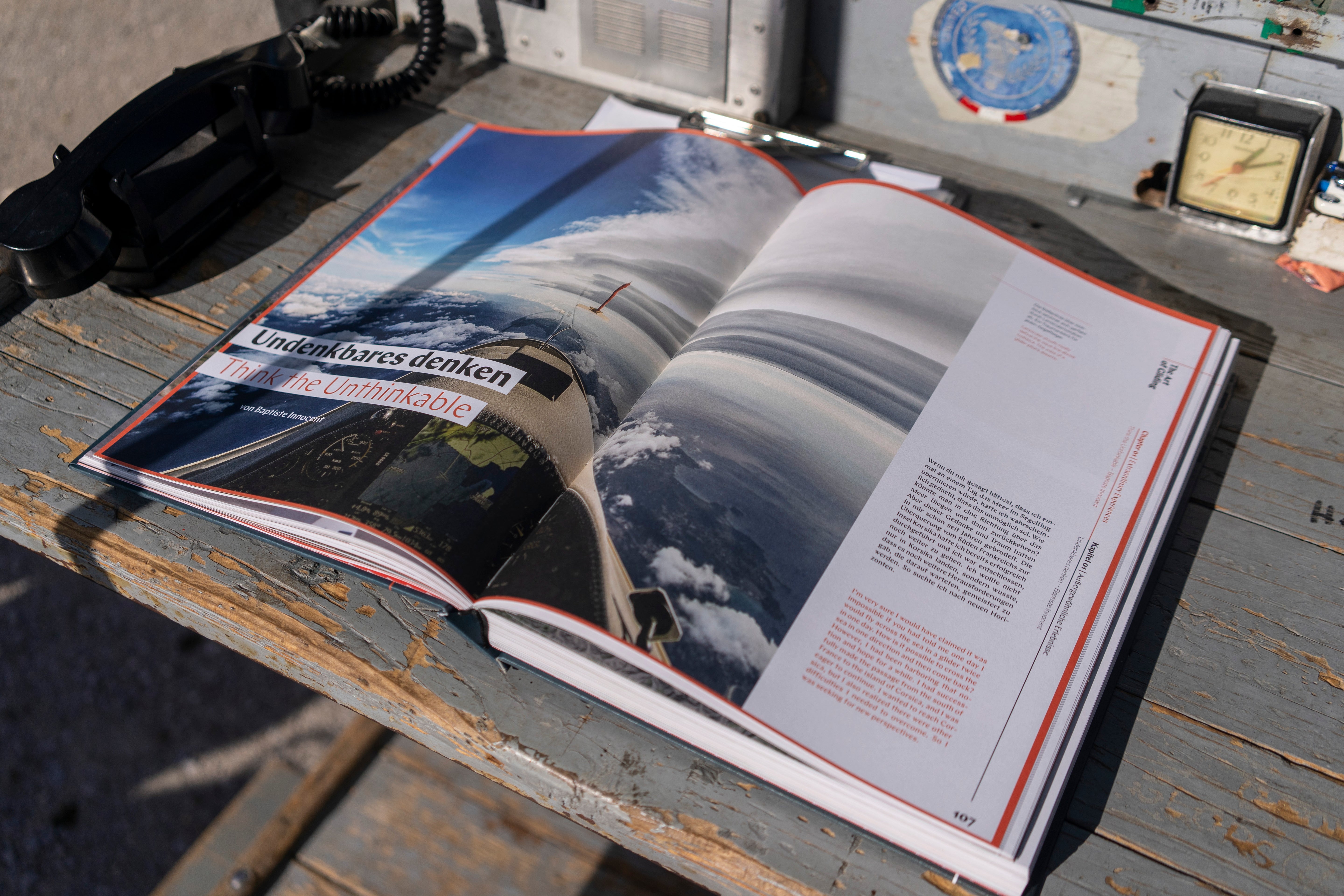
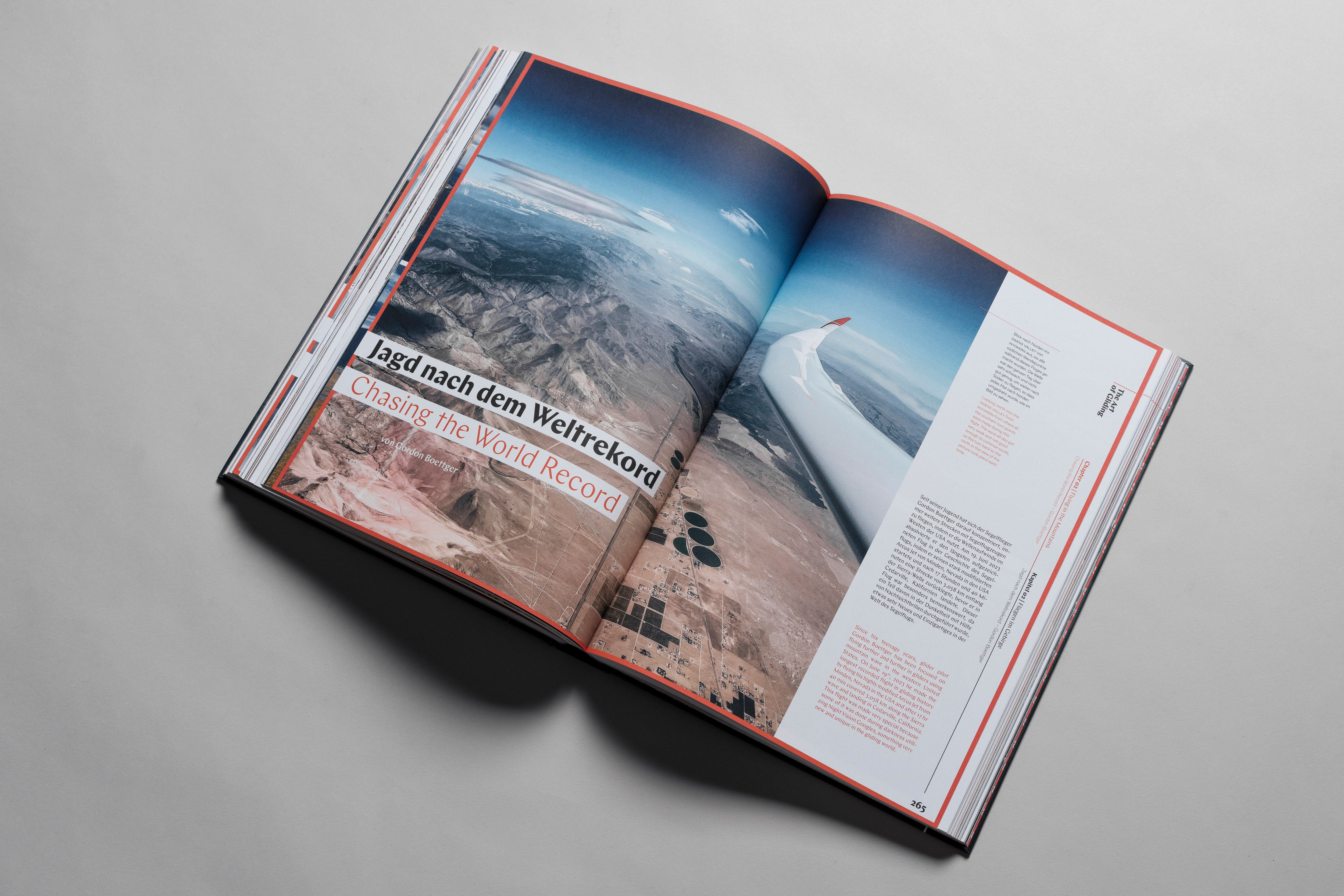


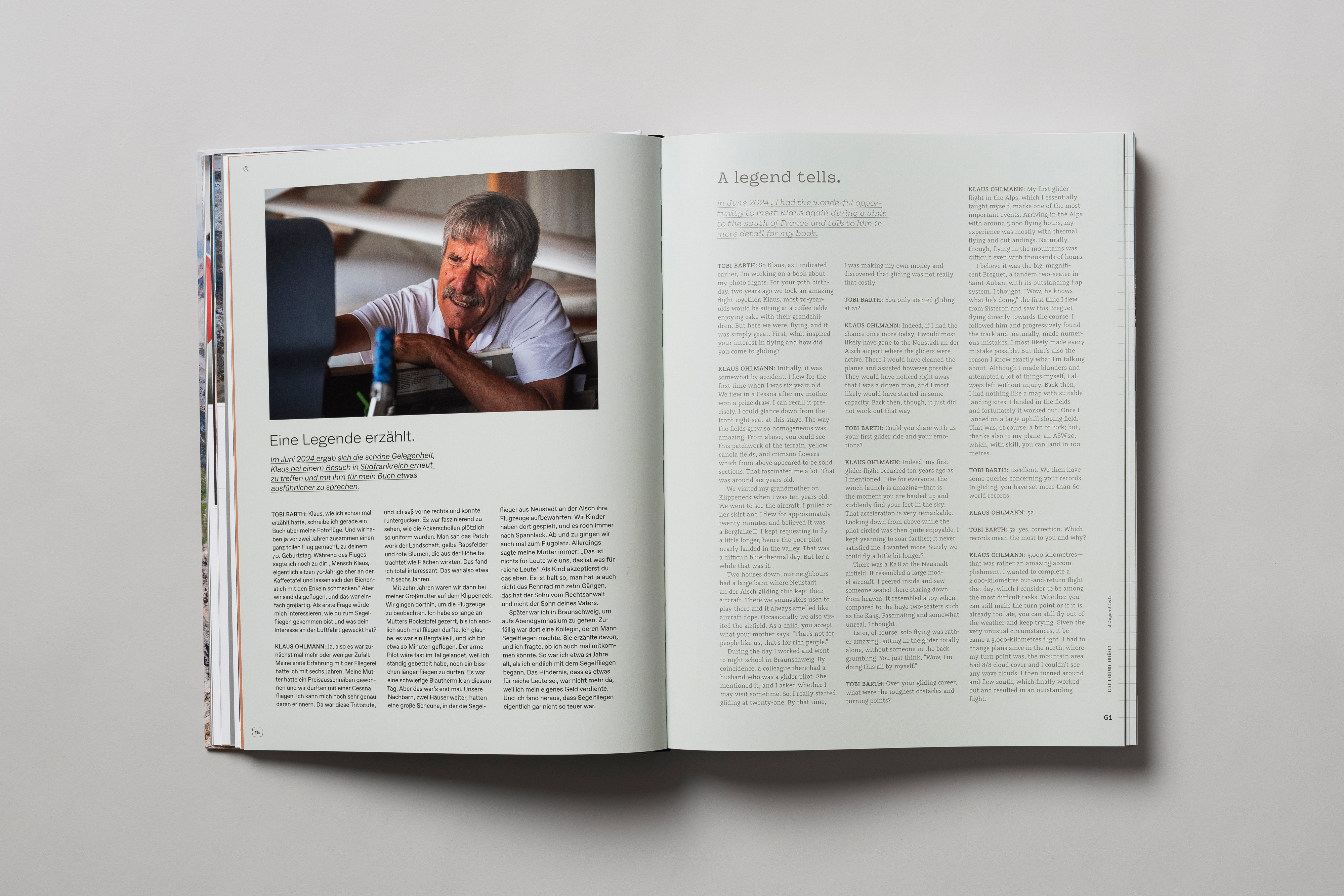
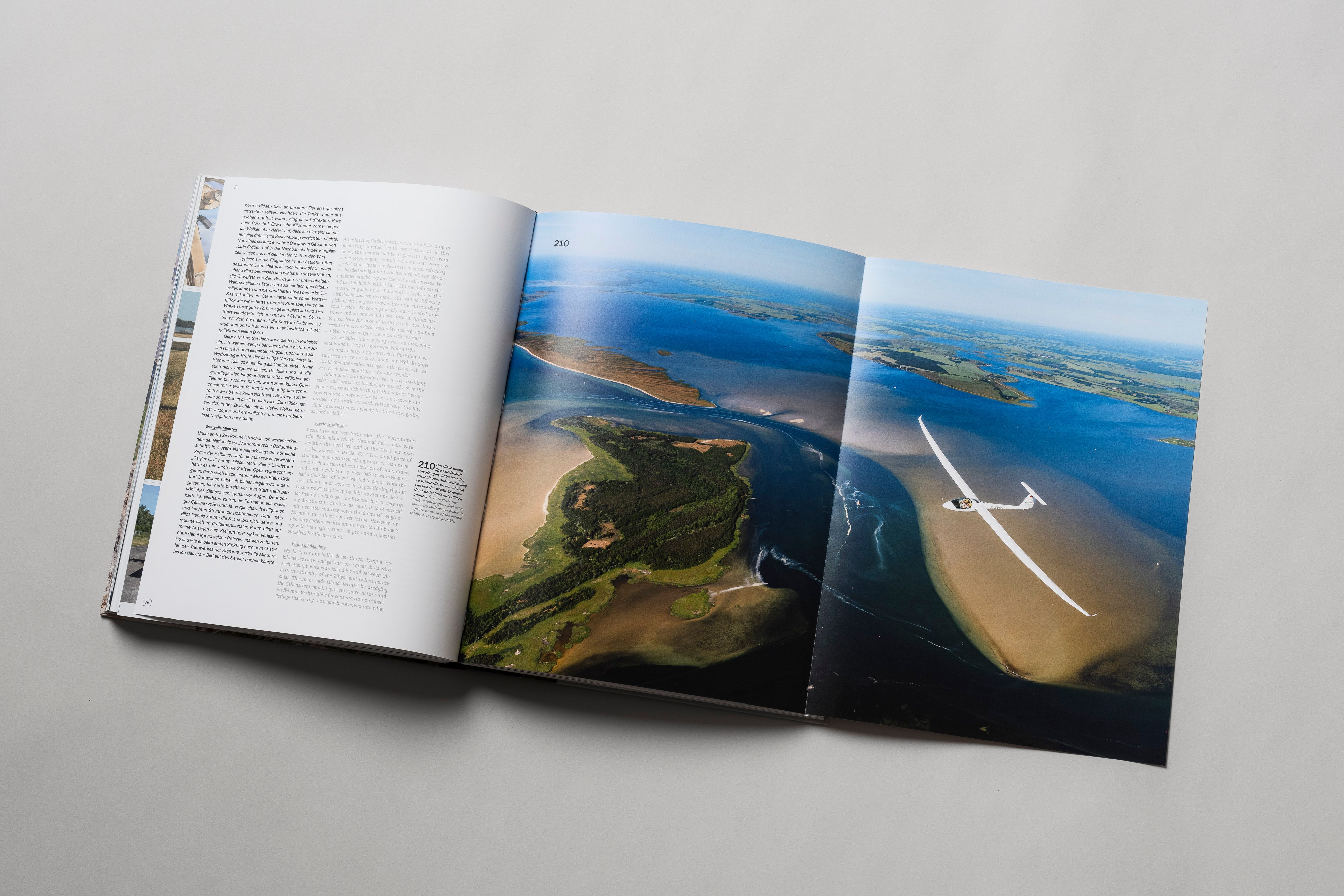
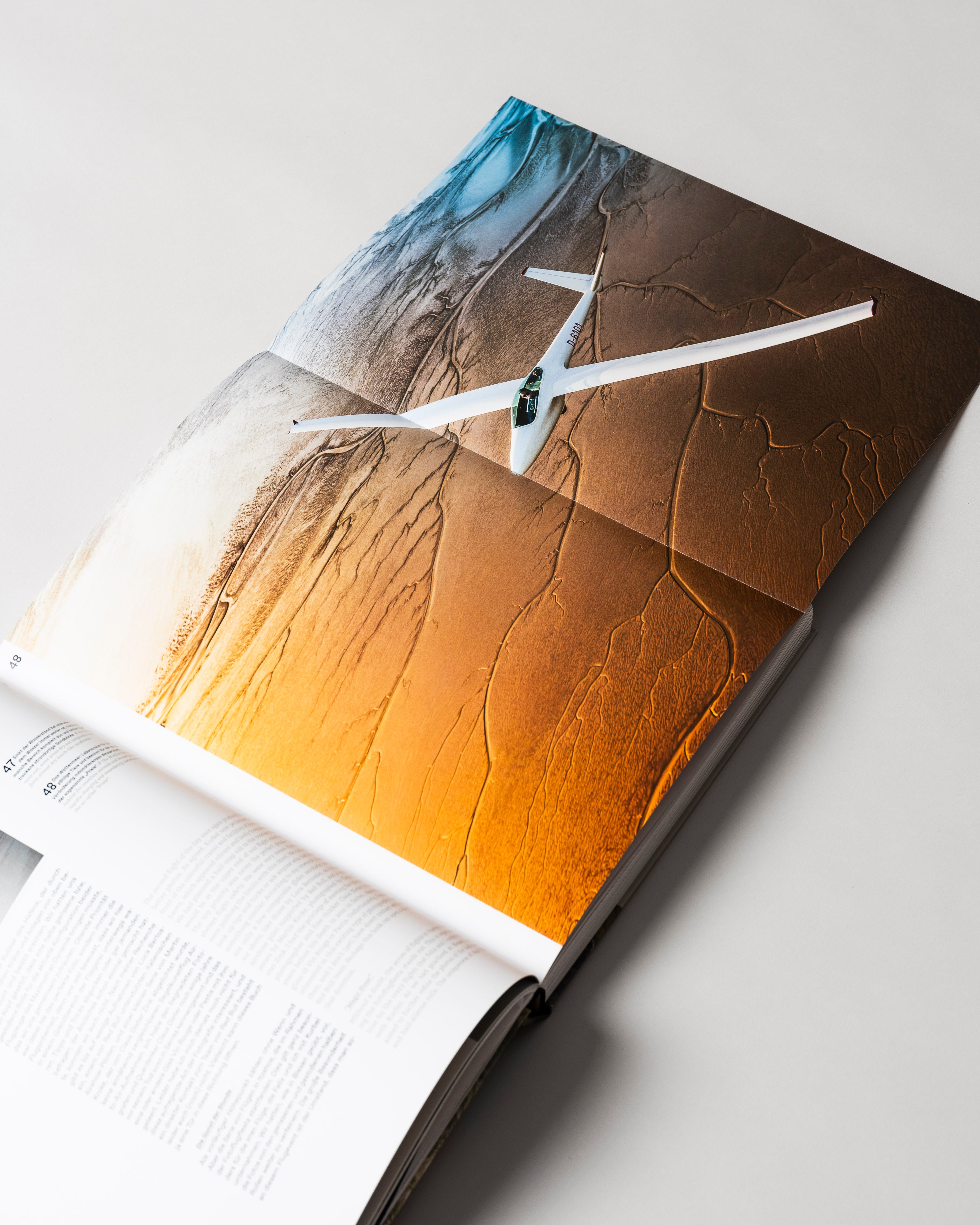
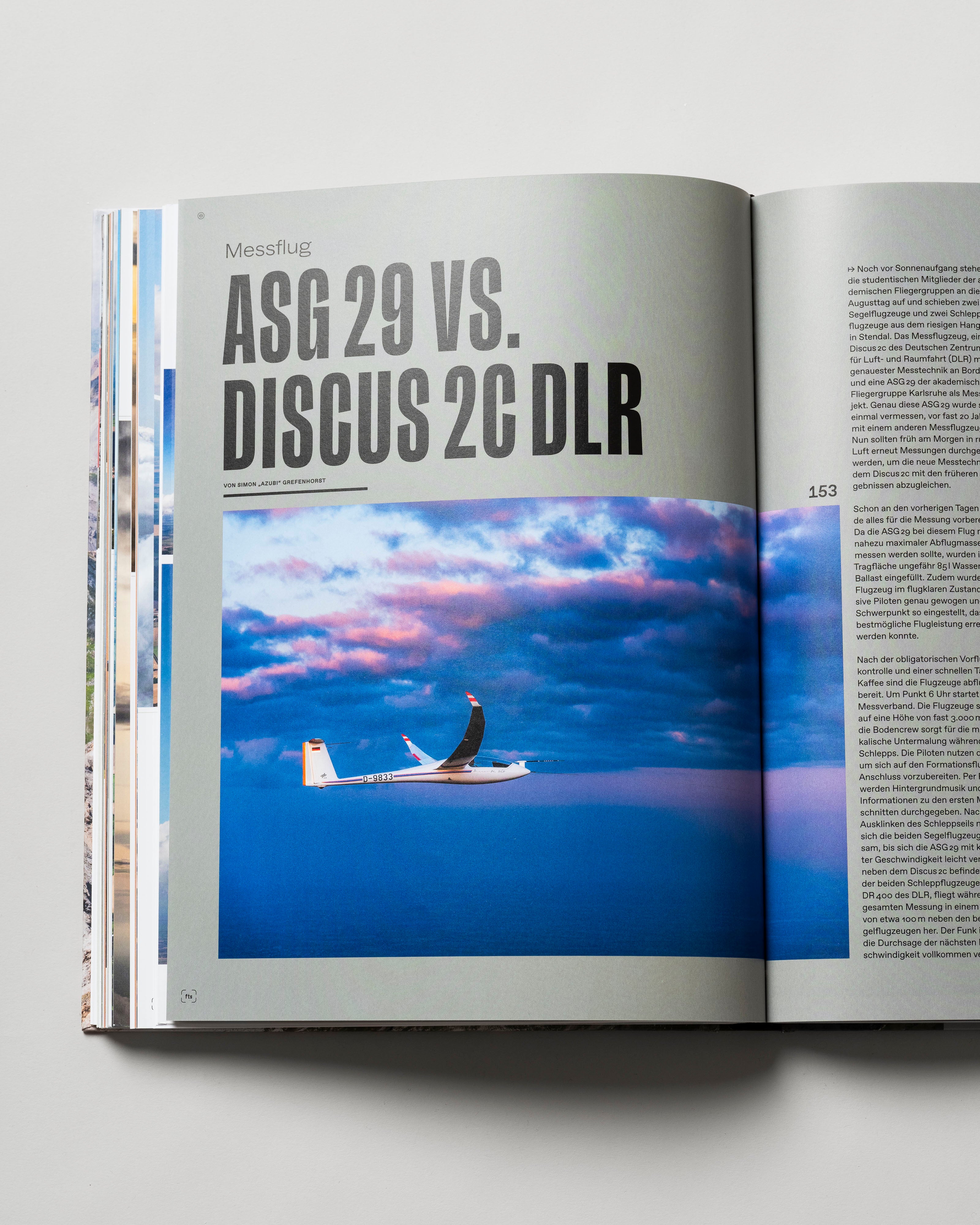
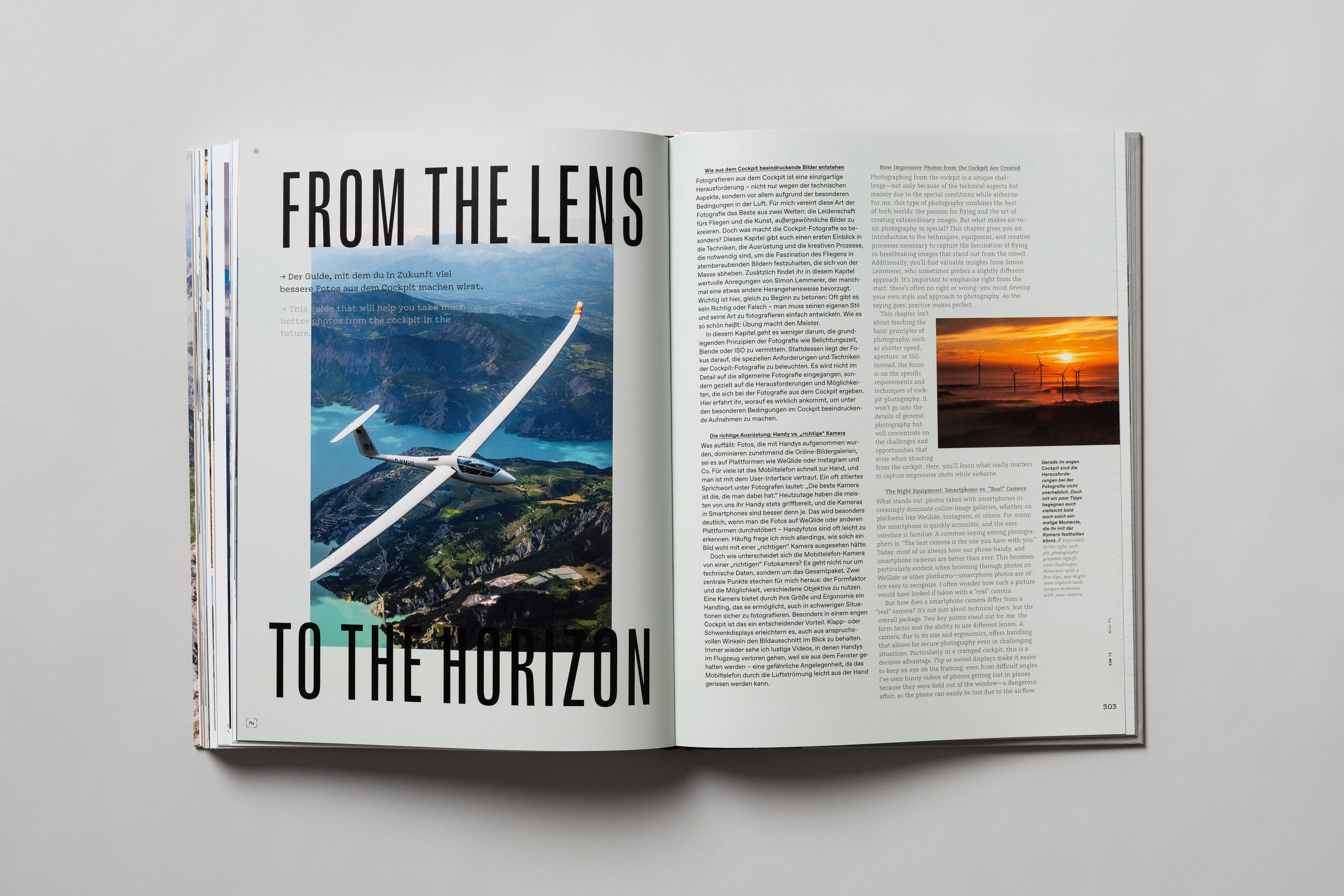
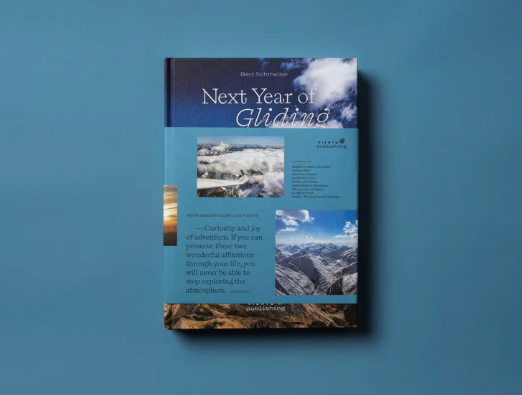




Hardly any area of soaring is as captivating and at the same time as demanding as flying in the mountains. In the search for the perfect line between ridge lift, thermal lift and wave, there is little room for chance. With Peak Soaring, record-breaking pilot, instructor and coach Benjamin Bachmaier presents a work that combines theory, practice and emotion – a new standard book for all who want to understand and master alpine soaring. For the English edition of the book, Clemens Ceipek – well known from “Chess in the Air” – joined the project. His blend of flying experience and outstanding translation expertise proved immensely valuable.
Benjamin, you are well known far beyond the gliding scene as a record-holding pilot and instructor. What prompted you to write a book about mountain soaring?
For many years I have been teaching alpine soaring, both in theory and in practice. Over time I realised that there is no single work that explains all aspects – meteorology, tactics, technique and safety – in a systematic context. Peak Soaring is intended to fill that gap. I wanted to describe mountain flying as we experience it today – with modern insights, but also with the emotional perspective that makes this sport so special.

On tour in the best XC conditions
What sets Peak Soaring apart from existing textbooks?
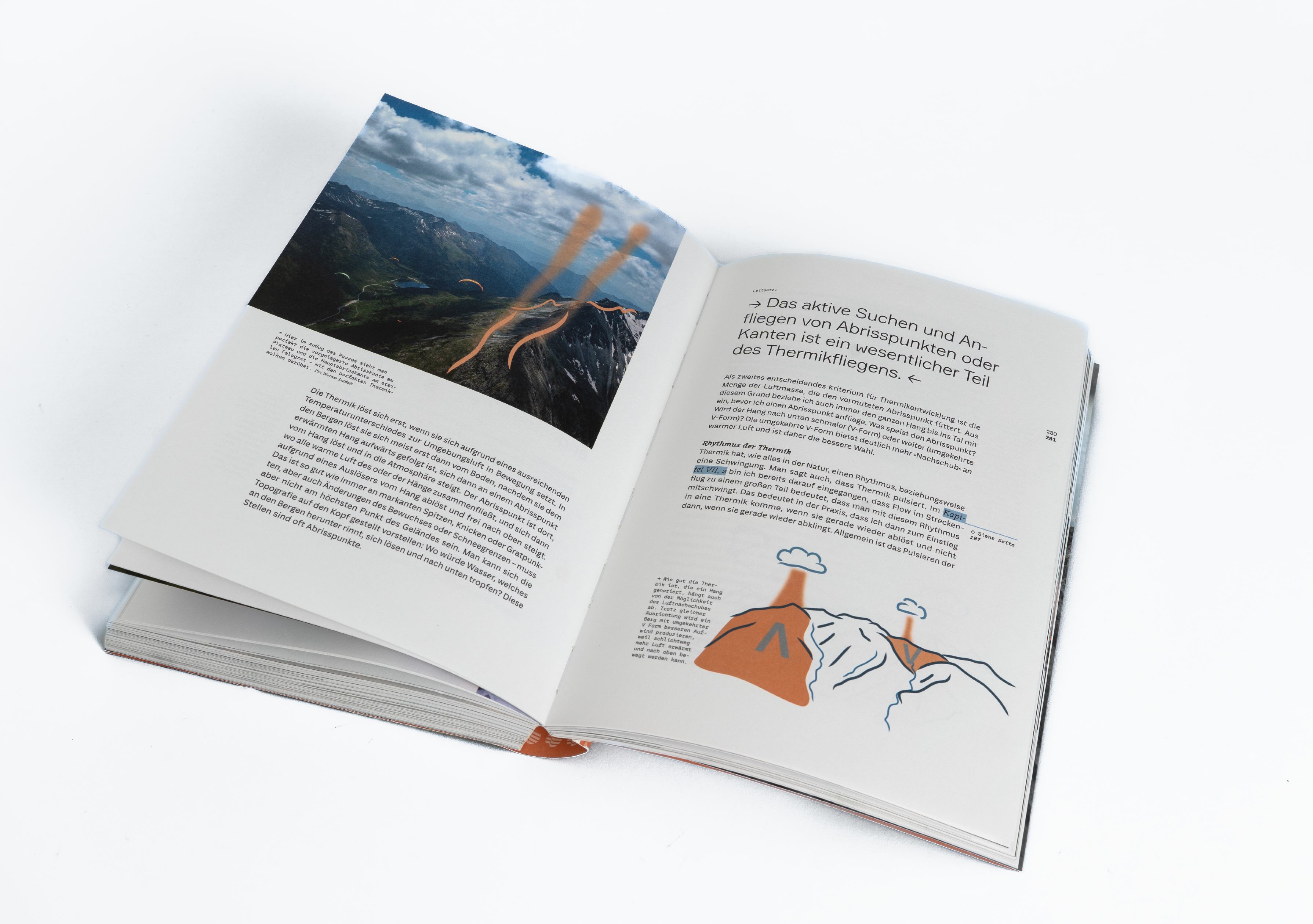
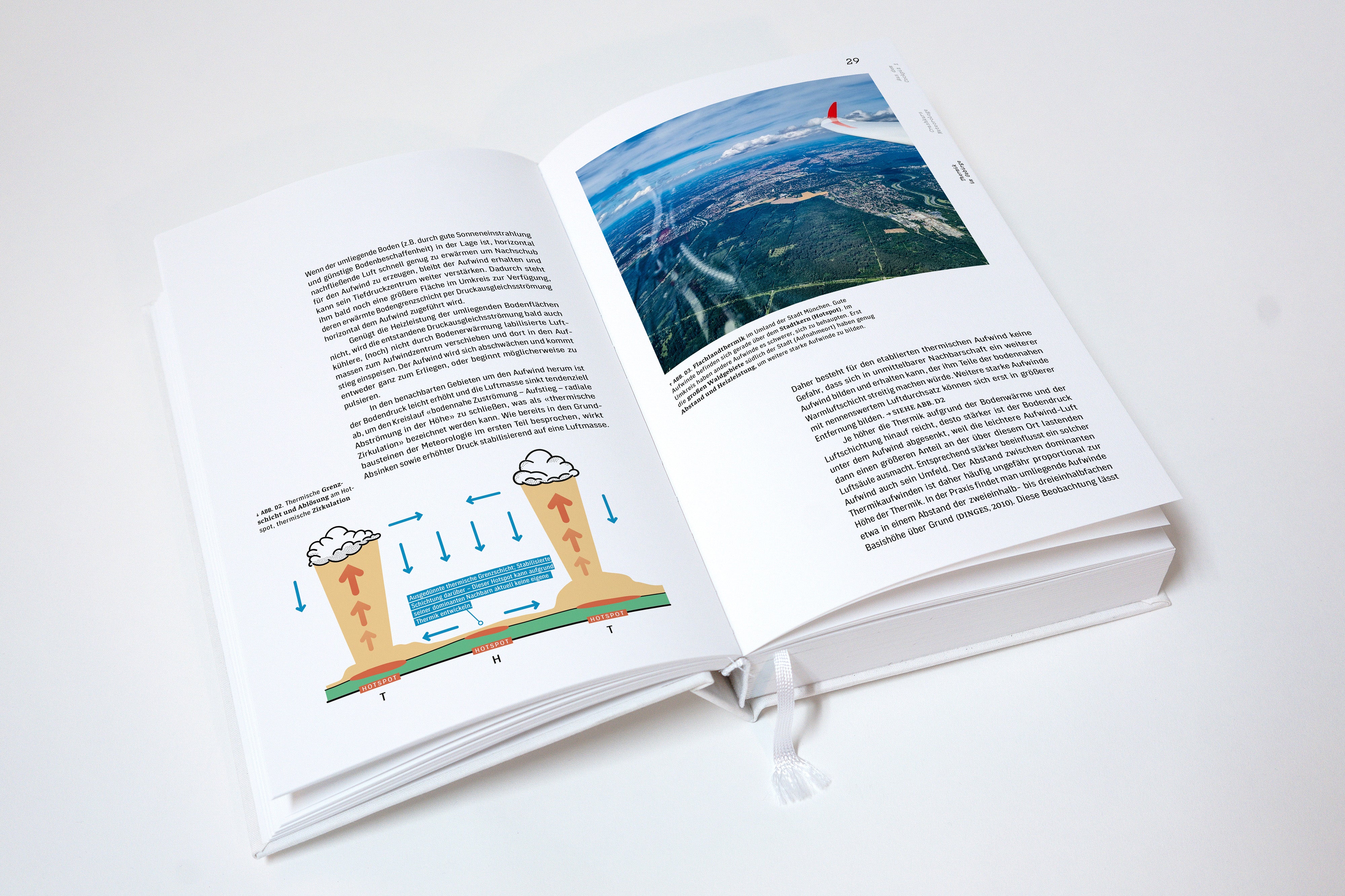
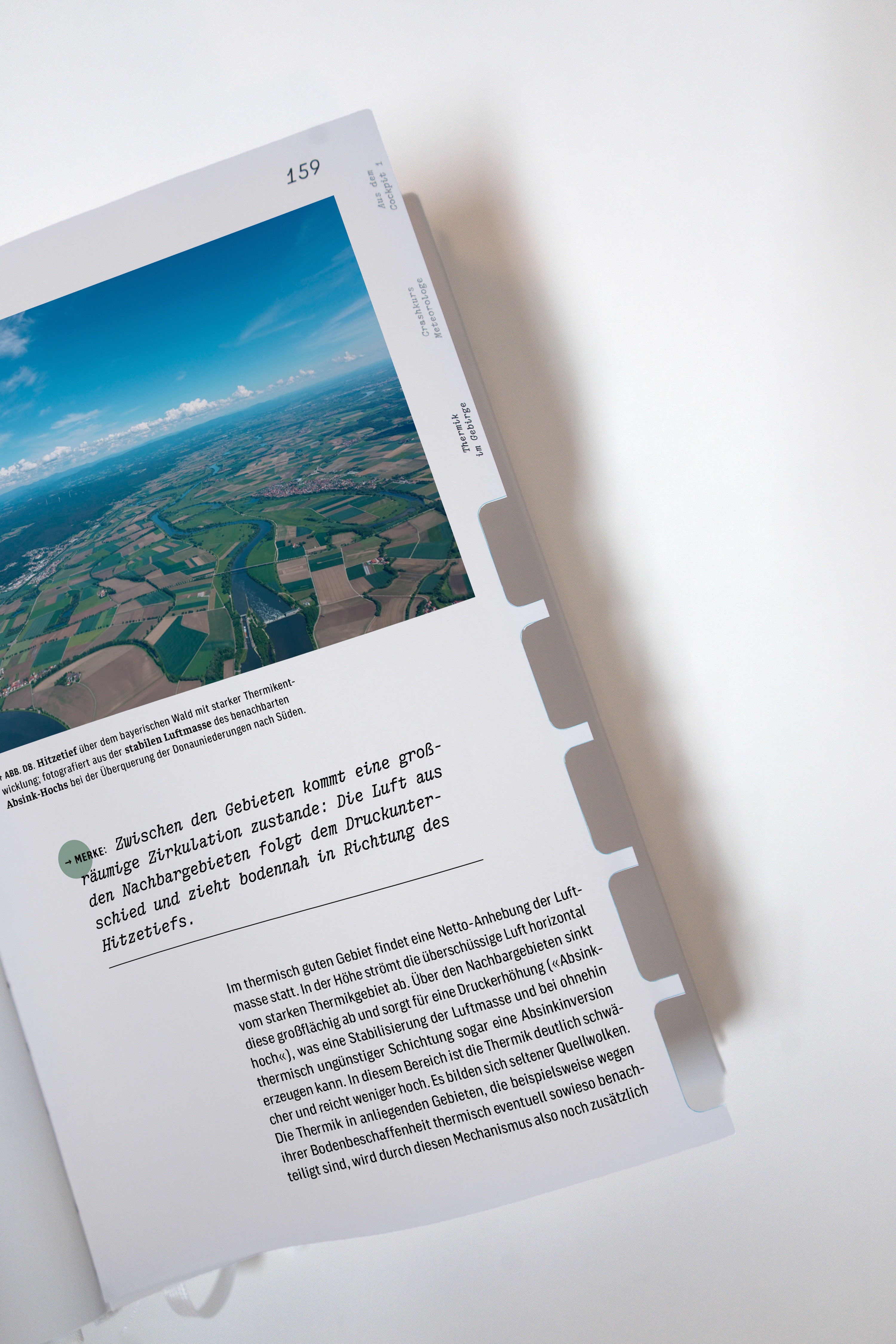
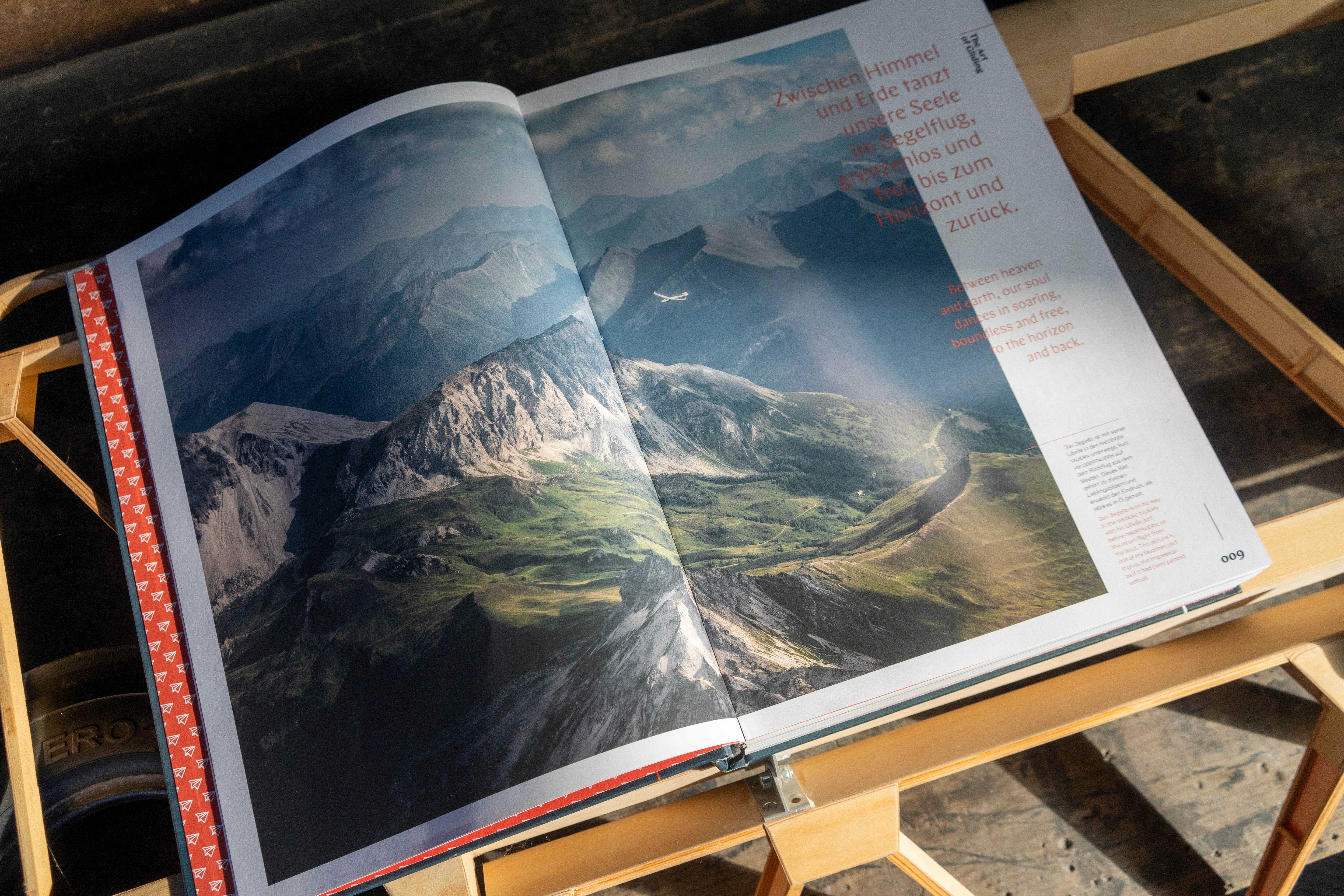
Many books cover individual topics, such as thermals or wave flying, very well – but rarely does everything interlock. In Peak Soaring, I link meteorological fundamentals with their practical application in the cockpit. It is about understanding why certain systems form and how to derive the right in-flight decisions from that knowledge. Numerous illustrations, real flight examples and a large map of the Alps create a direct bridge to practical flying.

Recognising lines of convergence
Your book is explicitly not aimed only at experts. How do you bridge the gap between fundamentals and advanced knowledge?
It was important to me that less experienced pilots also find an accessible entry point. The book builds up step by step – from thermals to demanding wave flights and cross-country flying. At the same time, it offers enough depth to give seasoned mountain pilots something to think about.
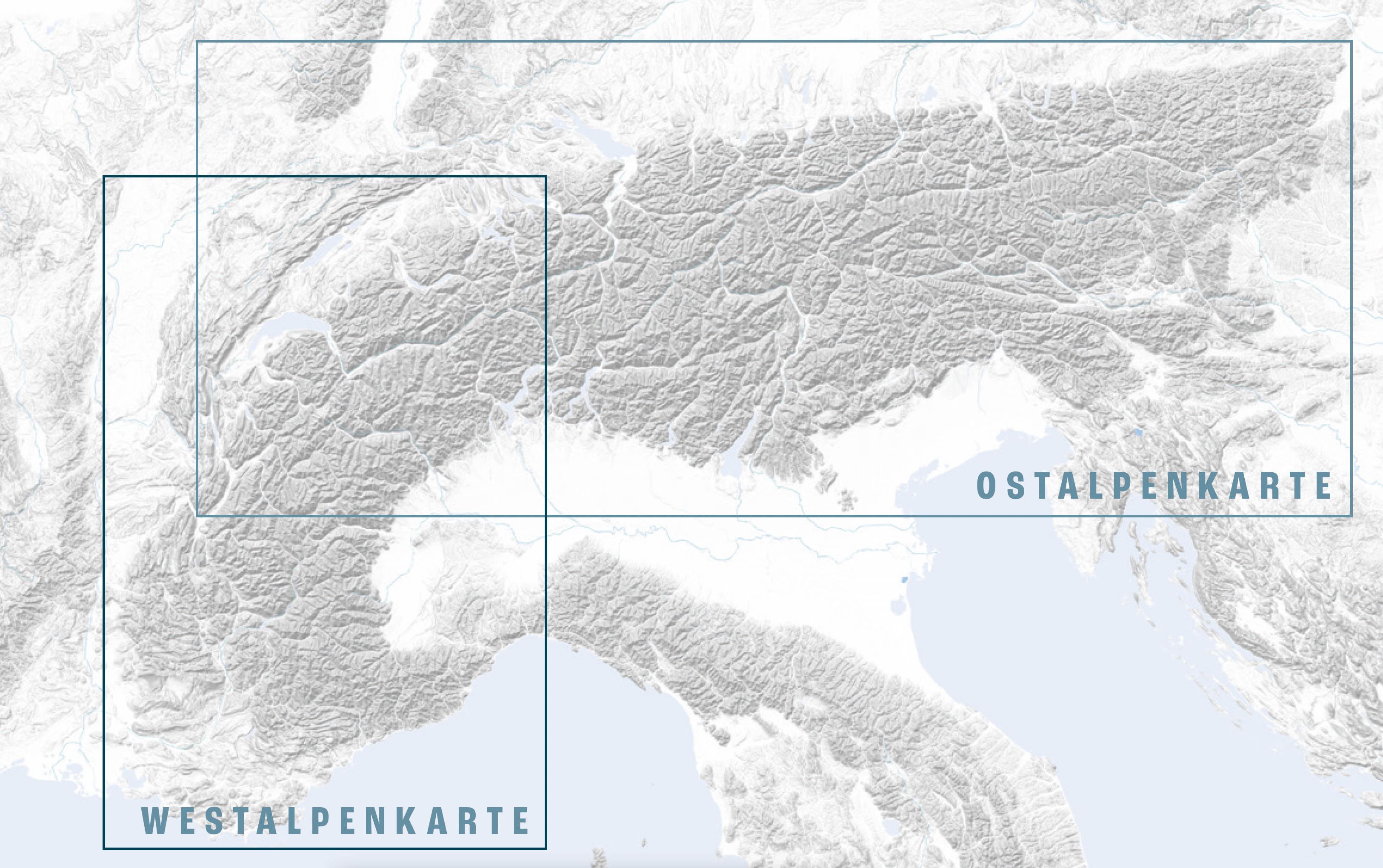
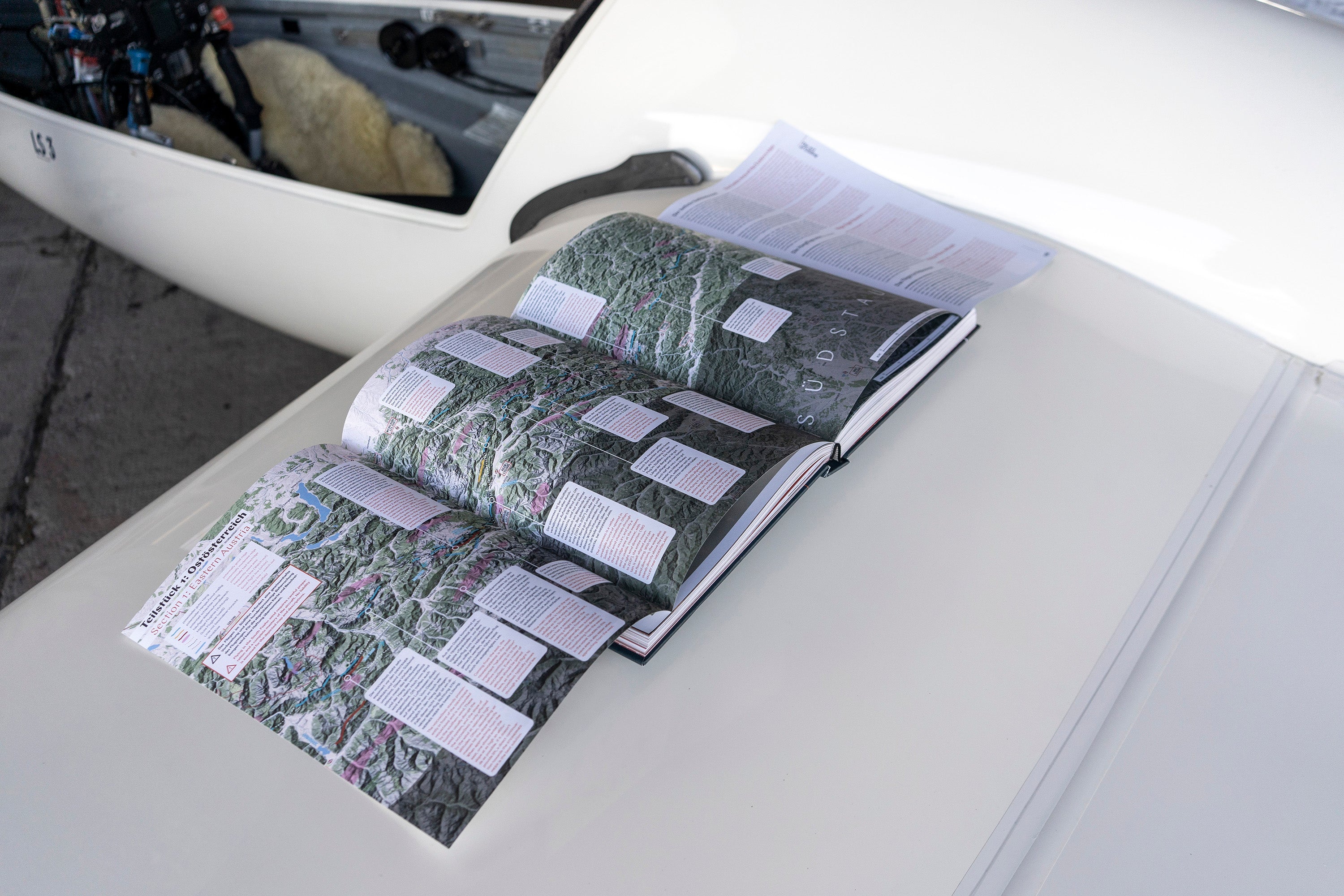
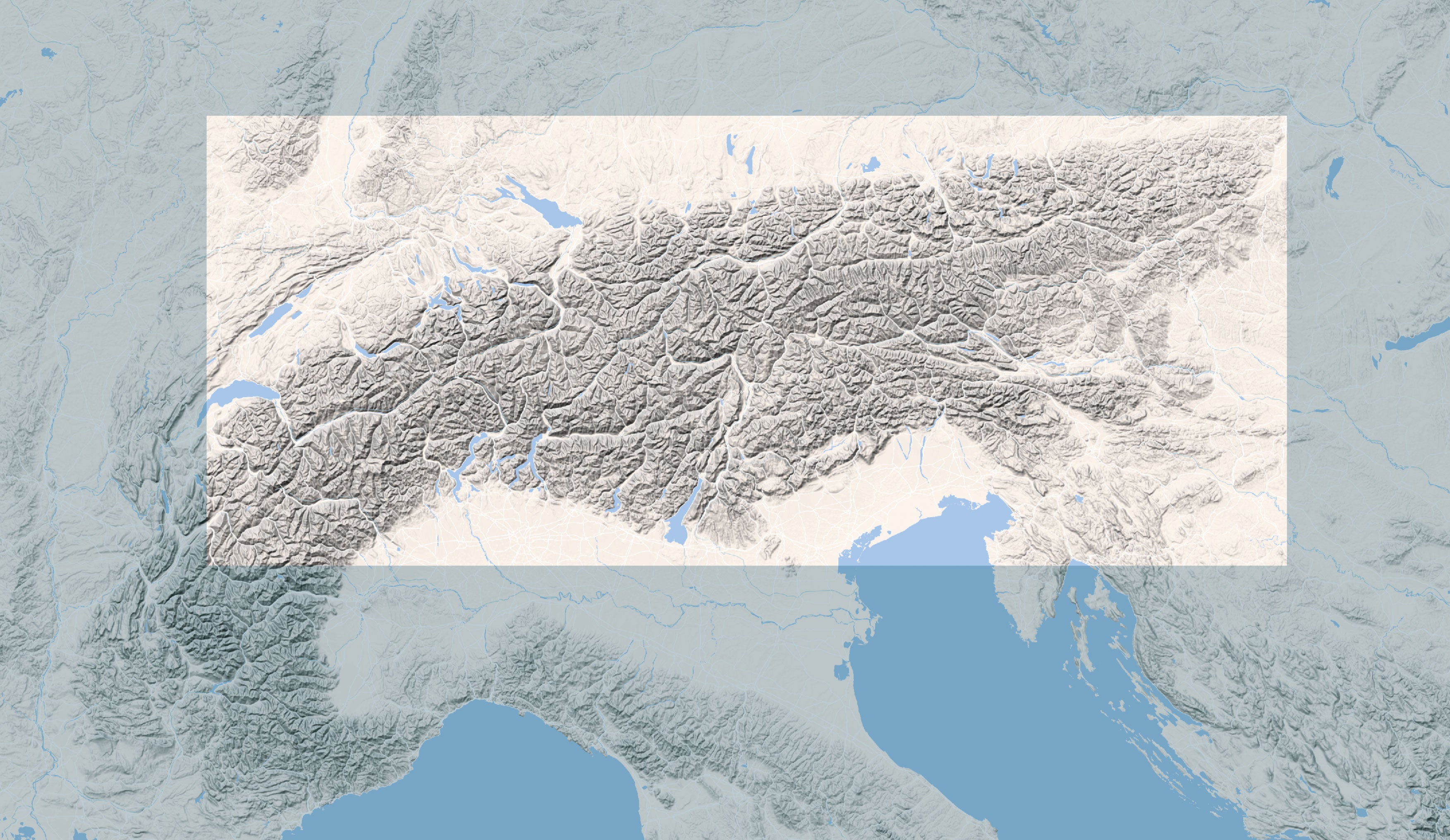
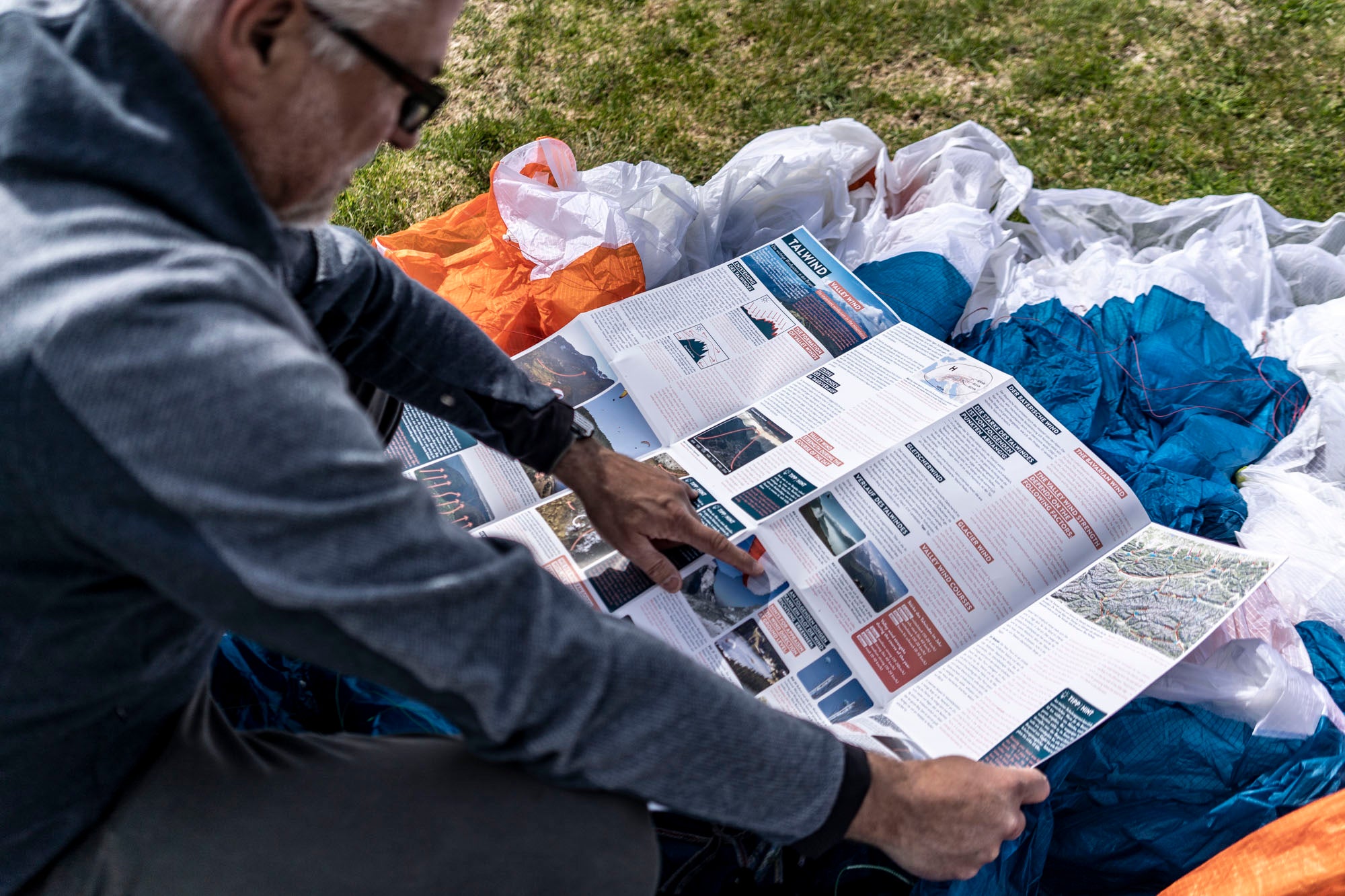
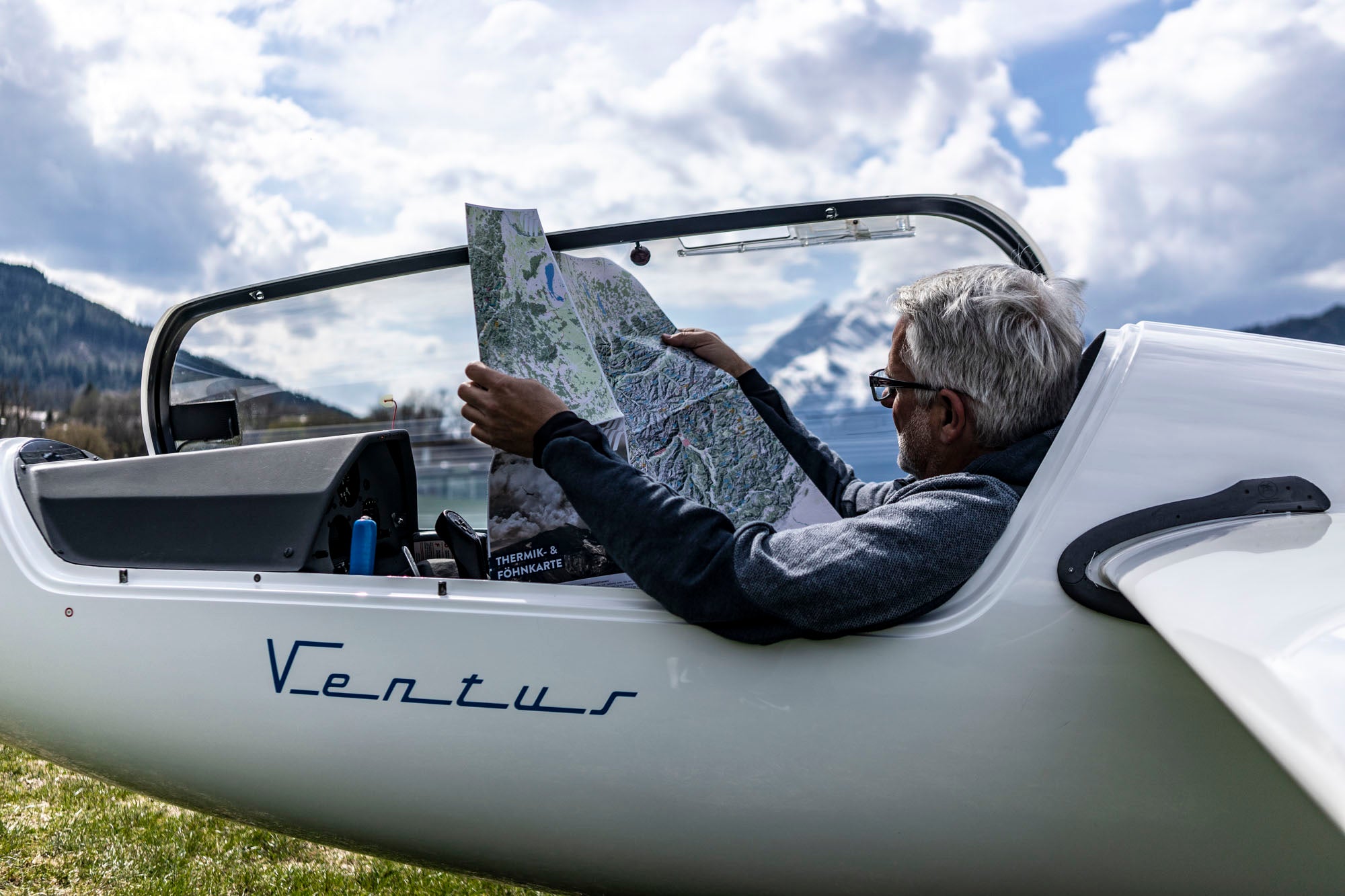
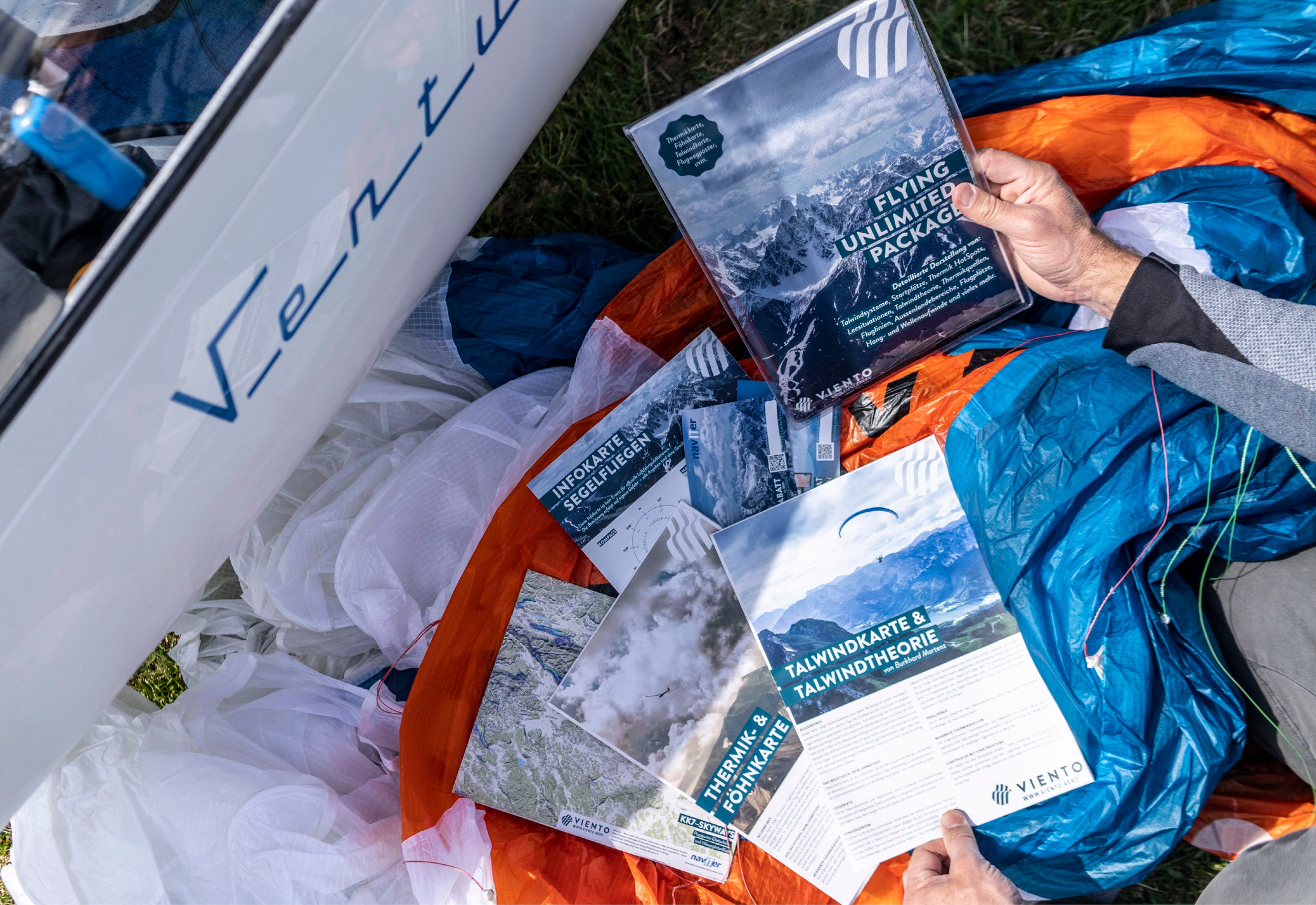
Printed relief map of the entire Alps included with the book: airfields, major passes, key reference points from the book and much more.
You write in a very personal, often almost narrative style. Was that intentional?
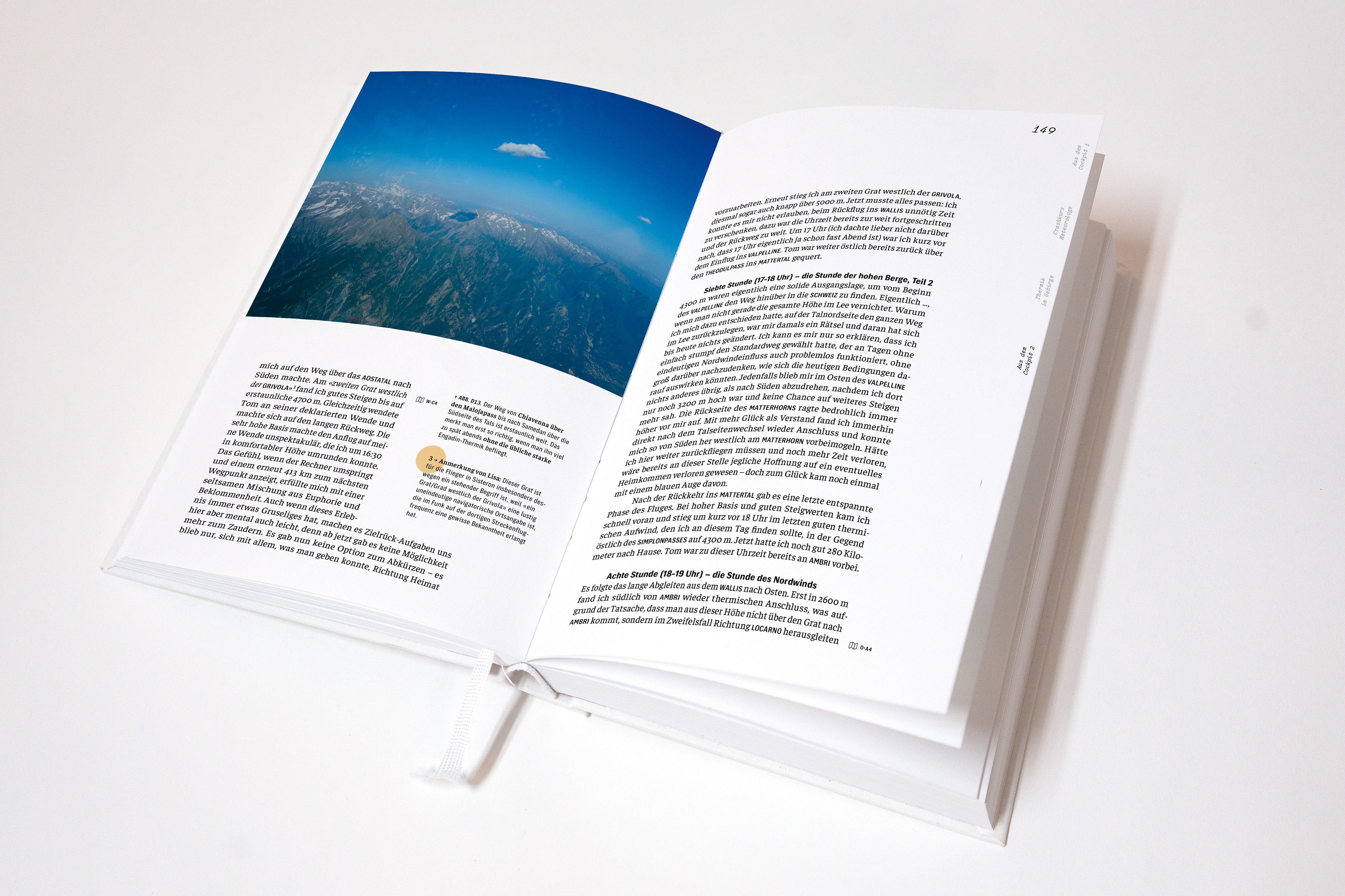
Absolutely. I am convinced that learning works better when you feel emotionally engaged. Between the theoretical sections I talk about real flights – moments above the Alps that shaped me. These stories show that knowledge and enthusiasm are inseparable in mountain soaring.
How important is the safety aspect to you in mountain flying?
It is central. Alpine soaring is fascinating, but demanding. Many critical situations can be avoided if you understand the systems and recognise early when a lift line ends or a lee wave breaks down. Safety arises from knowledge, preparation and humility before nature.

Making the right tactical decision
The book contains numerous illustrations and a large relief map of the Alps. What is the role of the visual element?
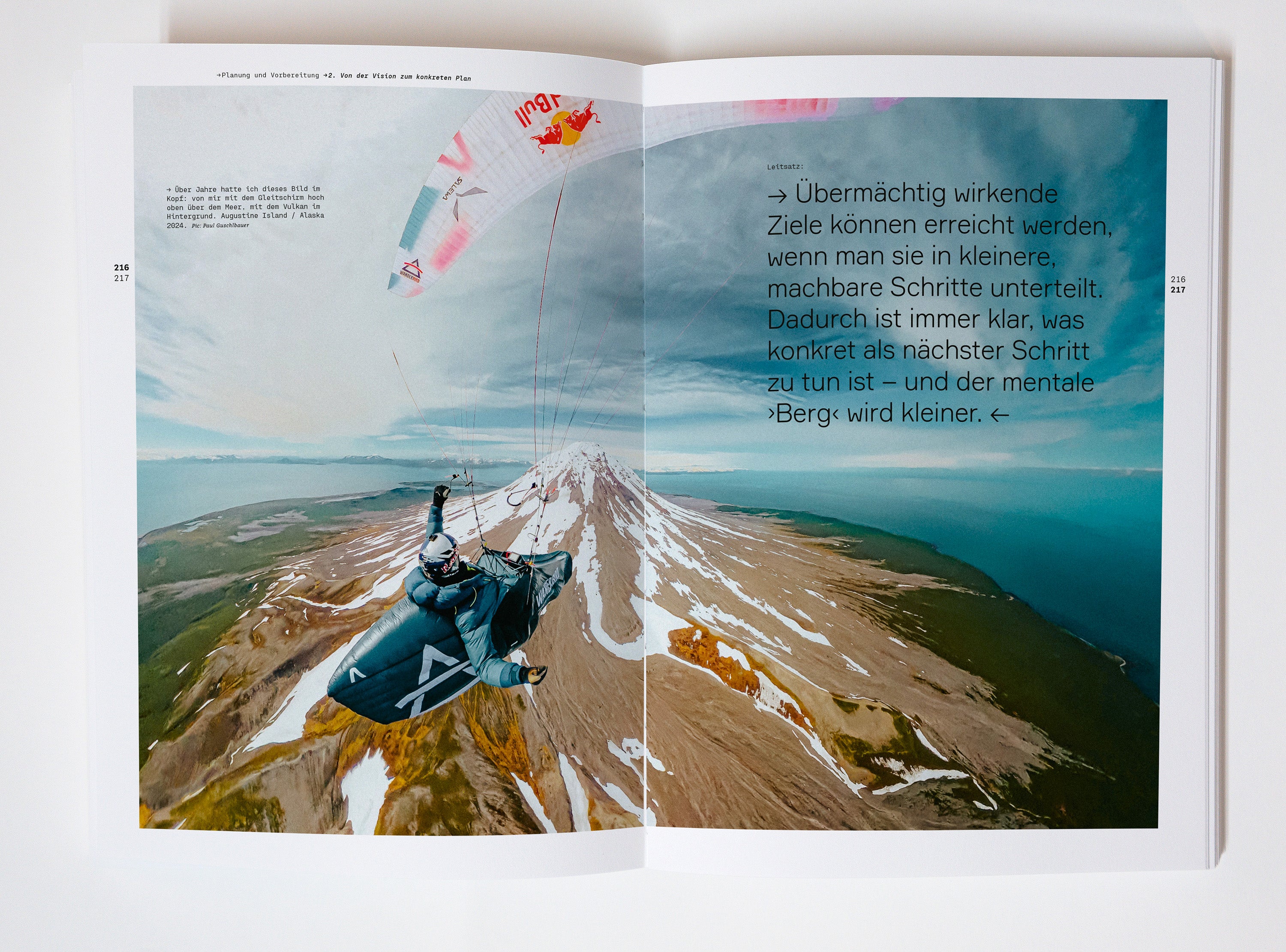
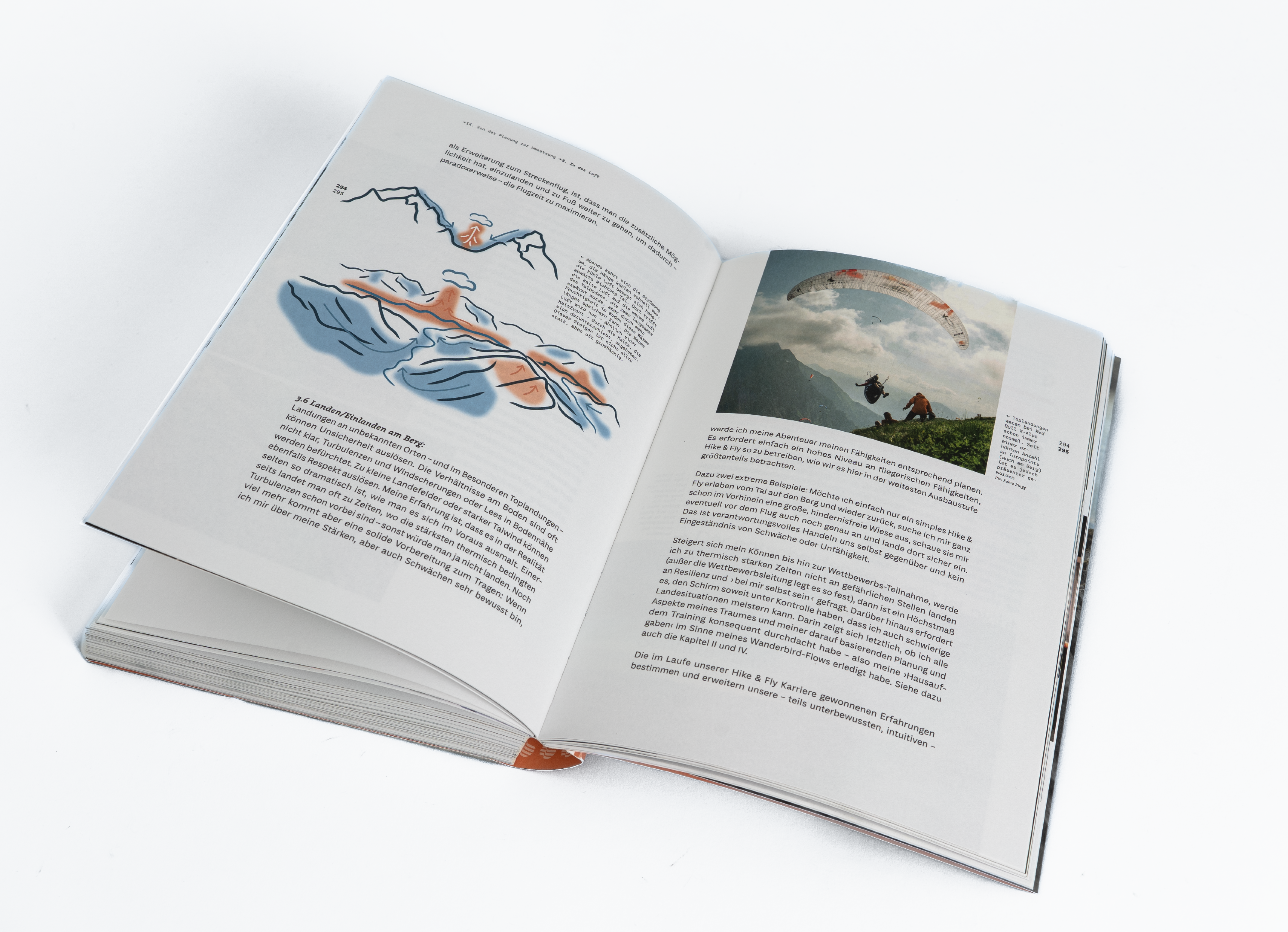
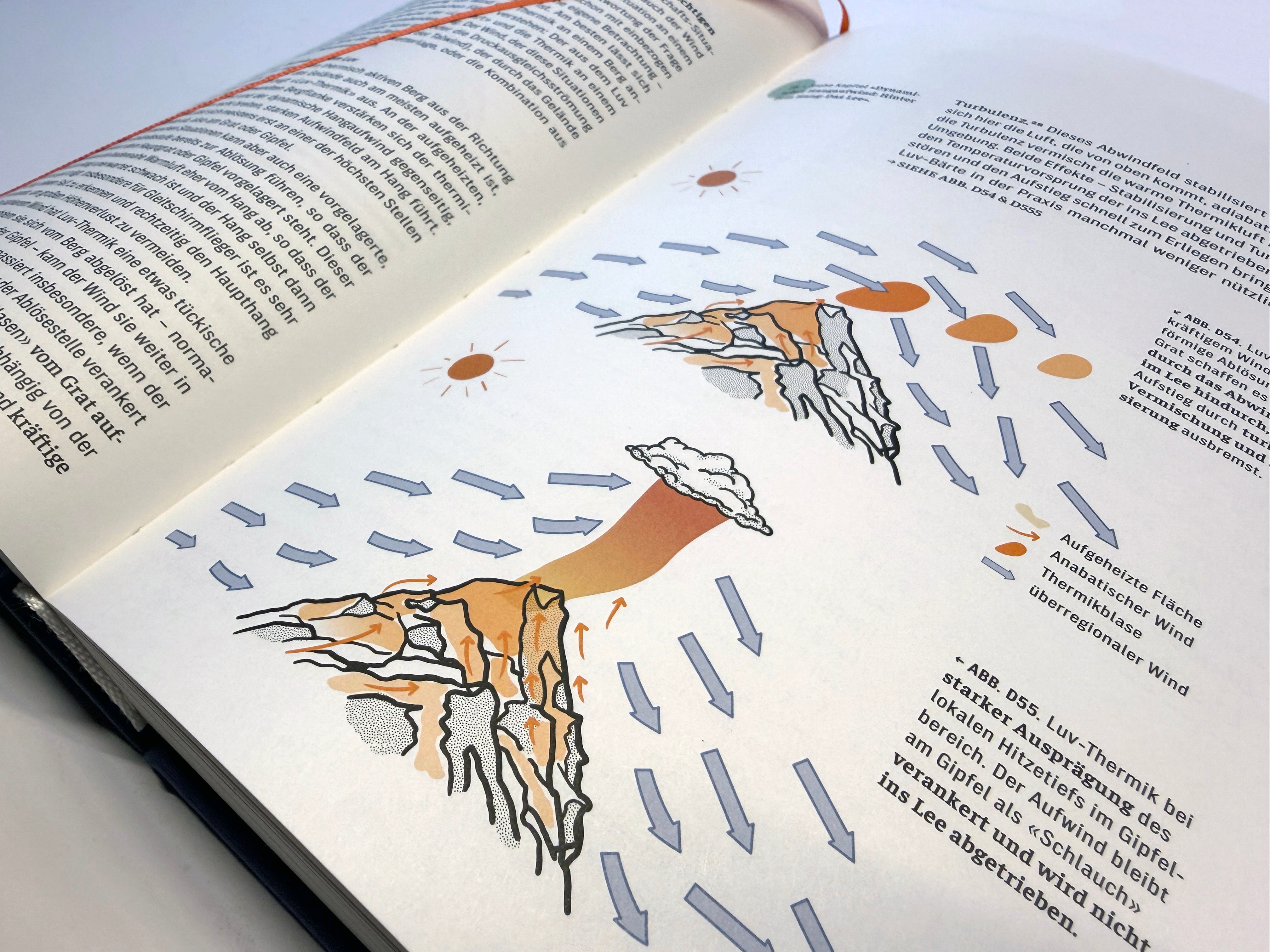
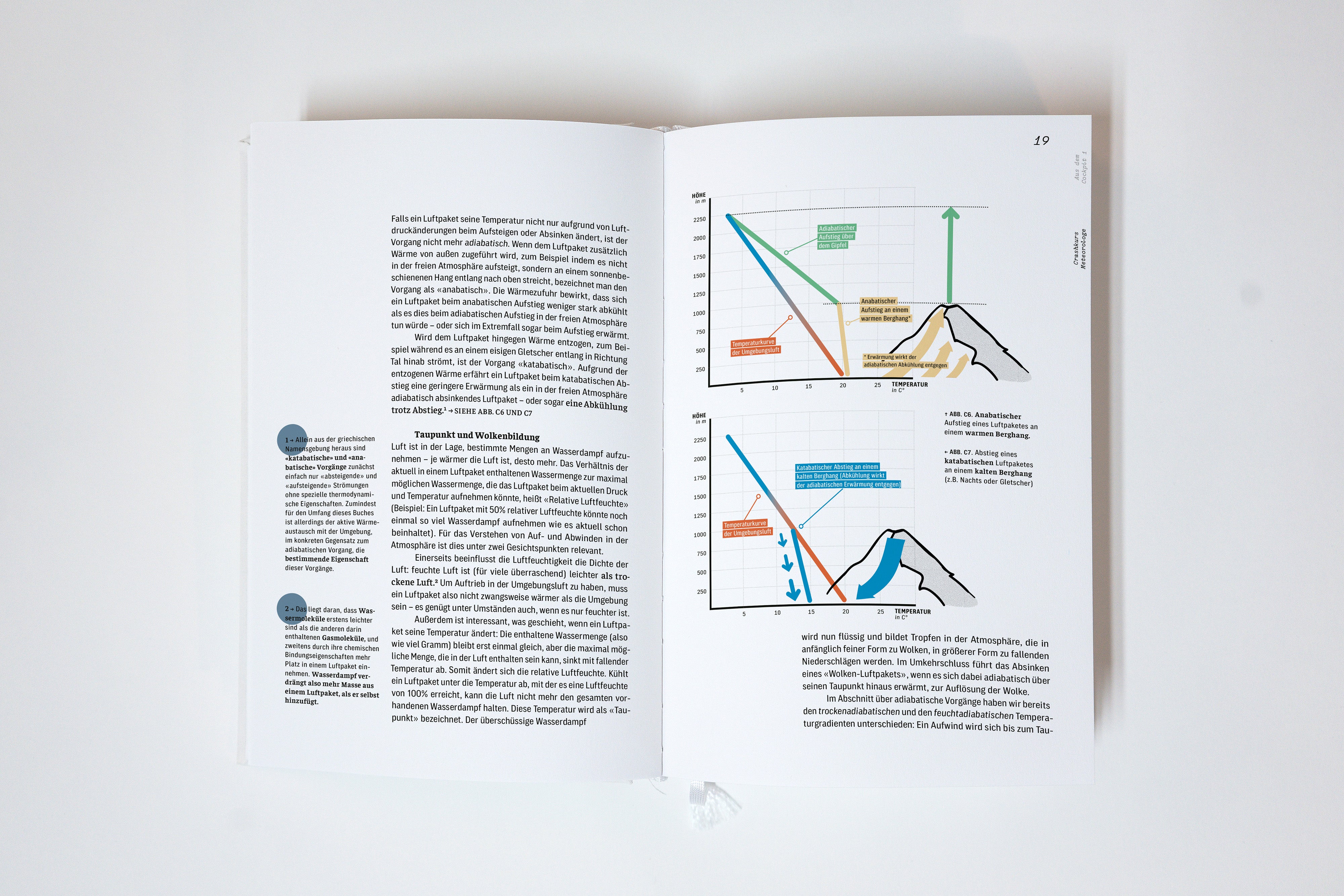
A crucial one. Flying is a three-dimensional experience – and that is exactly what I wanted to make visible. The illustrations depict airflow, wind systems and lift in a way that is intuitive to grasp. Together with the photographs, they form a visual map of mountain soaring. The included map of the Alps transfers theory directly to real regions and supports practical flight planning. It becomes clear how closely topography, weather and flight tactics are interconnected.

What do you hope readers will take away from Peak Soaring?
My aim is that, after reading, you not only know more but fly differently – with greater awareness, structure and enjoyment. I hope the book inspires readers to see mountain soaring for what it truly is: a combination of science, craftsmanship and emotion.

For the joy of flying …
About the author:
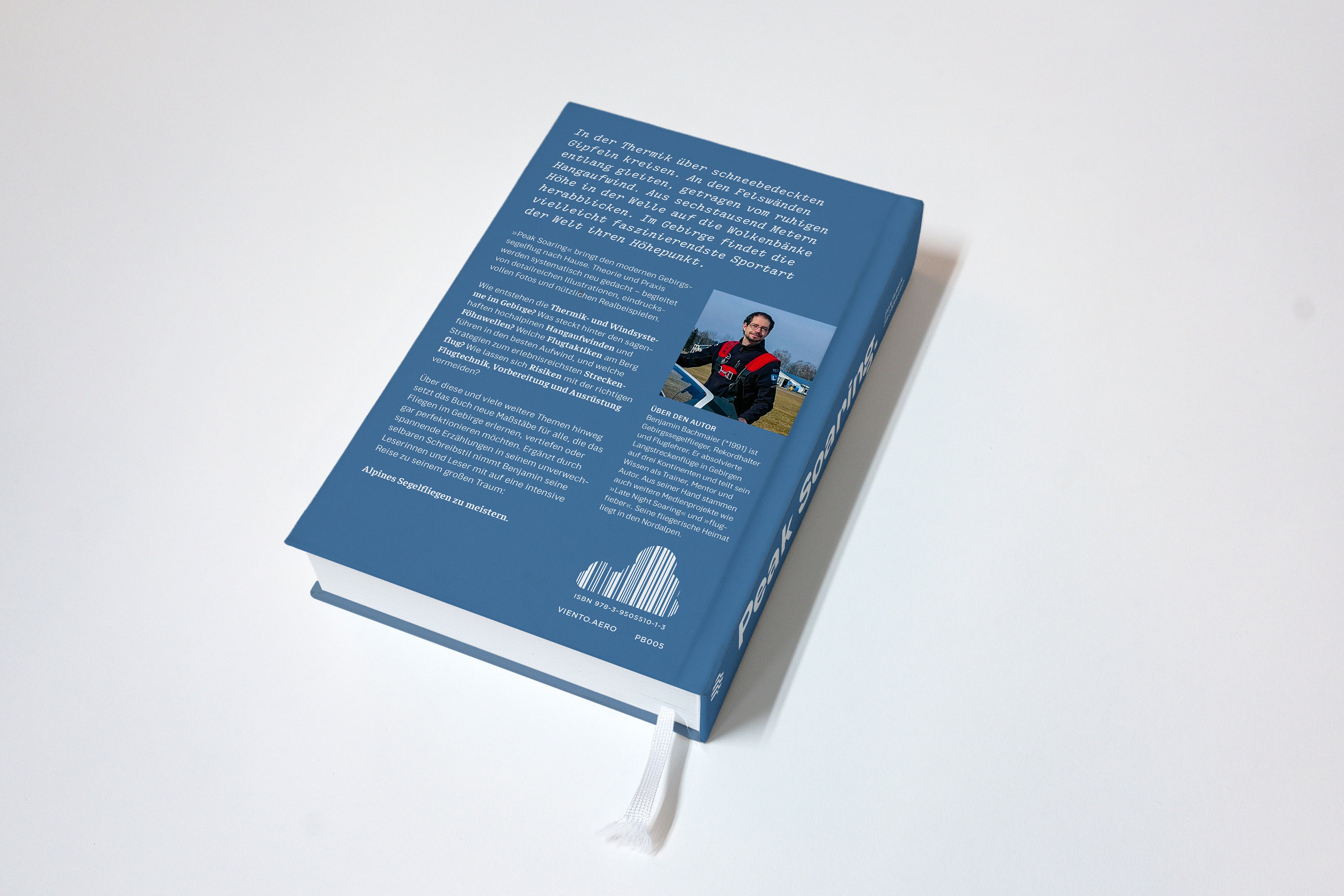
Benjamin Bachmaier (1991) is a mountain soaring pilot, instructor and coach. He flew in the German Junior National Team, holds several German records in the Northern Alps and has completed long-distance flights on three continents. In addition to his coaching work, he shares his experience in projects such as “Late Night Soaring” and “flugfieber”.
More information about the book can be found here


